

Ring Updates Device Security and Privacy—But Ignores Larger Concerns
Amazon’s surveillance doorbell company Ring has announced extra layers of security and control for users after a wave of backlash from civil liberties and cyber security organizations like EFF and Mozilla. Organizations raised major concerns over Ring’s lack of effort in protecting the data and security of users,...
Virginia Anti-SLAPP Bill is Good for Free Speech But Can Still Be Made Stronger
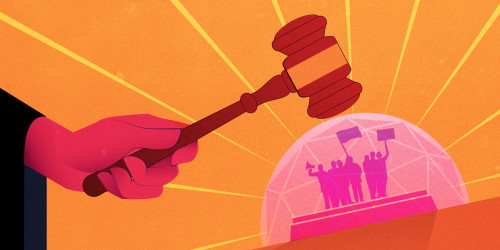
Update March 31: Earlier this month, the Virginia Legislature closed down without passing any version of an anti-SLAPP bill. We hope Virginia lawmakers will protect free speech in their state by passing such a bill in the next legislative session.The Virginia legislature is on the verge of a big step...
In Foreshadowing Cryptocurrency Regulations, U.S. Treasury Secretary Prioritizes Law Enforcement Concerns
U.S. Treasury Secretary Steven Mnuchin foreshadowed the Trump administration’s plans for greater surveillance of cryptocurrency users during his testimony before the Senate Finance Committee on Wednesday. He noted that cryptocurrency was a “crucial area” for the Treasury Department to examine, and said:We are working with FinCEN and we...

California Auditor Releases Damning Report About Law Enforcement’s Use of Automated License Plate Readers
California police and sheriffs are failing to protect the privacy of drivers on city streets, the California State Auditor’s office determined after a seven-month investigation into the use of automated license plate readers (ALPRs) by the Los Angeles Police Department and three other local law enforcement agencies. California State...

Reevaluating the DMCA 22 Years Later: Let’s Think of the Users
The Digital Millennium Copyright Act (DMCA) is one of the most important laws affecting the Internet and technology. Without the DMCA’s safe harbors from crippling copyright liability, many of the services on which we rely, big and small, commercial and noncommercial, would not exist. That means Youtube, but also Wikipedia,...
EFF Fights to Protect Anonymity of Glassdoor Commenter
San Francisco – The Electronic Frontier Foundation (EFF) is asking a state court to protect the identity of an anonymous Glassdoor commenter who is being targeted by their former employer. EFF filed a motion to quash a subpoena for identifying information of its client after the cryptocurrency exchange company...

EFF letter on the DMCA to Senate Judiciary Subcommittee on Intellectual Property (Feb 11, 2020)
Letter details EFF's findings on the Digital Millennium Copyright Act (DMCA) from its 22 years of efforts to reduce its harms to speech, innovation, competition, and fair use.

Uruguay Steps Too Quickly into the Right to be Forgotten Quagmire
The further the "Right to be Forgotten" (RTBF) online progresses from its original creation by Europe's Court of Justice, the broader and more damaging its ramifications seem to be. The latest attempt to insert it is a rushed proposal in Uruguay. The complaints of multiple digital rights groups across...
EFF, Internet Society, and Professors To Discuss Controversial Sale of the .ORG Registry
Washington, D.C.—The Electronic Frontier Foundation (EFF) and advocates for public interest organizations will participate tomorrow in an open discussion about a controversial plan by the nonprofit Internet Society to sell the .ORG domain registry to private equity firm Ethos Capital.EFF and hundreds of .ORGs oppose the $1.1 billion transaction, which...
Appeals Court Win for Open Source Advocate Speaking Out on Licensing Restrictions
San Francisco – An Open Source advocate and blogger criticizing a company, Open Source Security Inc. (OSS), has successfully defended a defamation lawsuit after an appeals court found that the company’s accusations against the blogger were baseless.The Electronic Frontier Foundation (EFF) represented Bruce Perens, a founder of the...

