
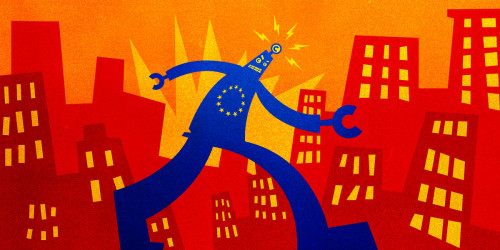
Europeans Deserve to Have Their Governments Test—Not Trust—Filters
Thanks to the adoption of a disastrous new Copyright Directive, the European Union is about to require its member states to pass laws requiring online service providers to ensure the unavailability of copyright-protected works. This will likely result in the use of copyright filters that automatically assess user-submitted audio, text,...

How To Protect Your Phone Number On Twitter
How Twitter's Default Settings Can Leak Your Phone Number
Twitter has publicly disclosed a security “incident” that points to long-standing problems with how the service handles phone numbers. Twitter announced it had discovered and shut down “a large network of fake accounts” that were uploading large numbers of phone numbers and using tools in Twitter’s API to match...

EFF Lawsuit Ends Censorship Against PETA on Public University’s Facebook Page
In a big win for free speech on the Internet, an EFF lawsuit has compelled the nation’s second-largest public university to stop censoring dissent on its social media. To settle our First Amendment case, Texas A&M University (TAMU) agreed to end its automatic and manual blocking of comments posted on...

What to Know Before You Buy or Install Your Amazon Ring Camera
So, you own or are thinking of buying a Ring camera. This post outlines a list of privacy and civil liberties concerns we have with Amazon’s Ring system so that you can be a more informed consumer, or—if you already own a Ring camera—be a more considerate neighbor. If You’re...

Speaking Freely: An Interview With Evan Greer
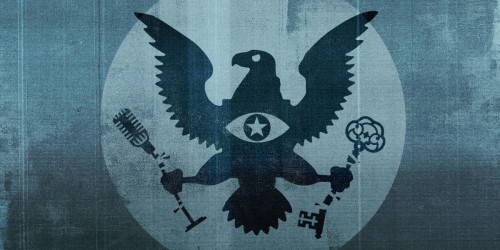
Congress Must Stop the Graham-Blumenthal Anti-Security Bill
There’s a new and serious threat to both free speech and security online. Under a draft bill that Bloomberg recently leaked, the Attorney General could unilaterally dictate how online platforms and services must operate. If those companies don’t follow the Attorney General’s rules, they could be on the hook...

Clearview AI—Yet Another Example of Why We Need A Ban on Law Enforcement Use of Face Recognition Now
This week, additional stories came out about Clearview AI, the company we wrote about earlier that’s marketing a powerful facial recognition tool to law enforcement. These stories discuss some of the police departments around the country that have been secretly using Clearview’s technology, and they show,...
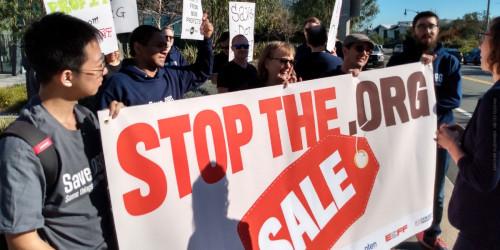
After Nonprofits Protest at ICANN, California's Attorney General Steps Into the .ORG Battle
Once appearing to be a done deal, the sale of the .ORG registry to private equity is facing new delays and new opposition, after a successful protest in front of ICANN last week by nonprofits and an intervention by the California Attorney General. Private equity firm Ethos Capital’s proposed...
Lawsuit in India Seeks to Shut Down Access to U.S. Journalism Website
Computer security researchers and journalists play a critical role in uncovering flaws in software and information systems. Their research and reporting allows users to protect themselves, and vendors to repair their products before attackers can exploit security flaws. But all too often, corporations and governments try to silence reporters, and...

