
Tuesday Hearing: EFF Argues in New Jersey Supreme Court That Defendant Can’t Be Forced to Turn Over Password to Encrypted iPhone
Trenton, New Jersey—On Tuesday, January 21, at 1 pm, EFF Senior Staff Attorney Andrew Crocker will ask the New Jersey Supreme Court to rule that the state can’t force a defendant to turn over the passcode for his encrypted iPhone under the Fifth Amendment, which protects American’s rights against self-incrimination.The...

Iranian Tech Users Are Getting Knocked Off the Web by Ambiguous Sanctions
Between targeted killings, retaliatory air strikes, and the shooting of a civilian passenger plane, the last few weeks have been marked by tragedy as tensions rise between the U.S. and Iranian governments. In the wake of these events, Iranians within the country and in the broader diaspora...

Rights Groups to European Commission: Prioritize Users’ Rights, Get Public Input For Article 17 Application Guidelines
The implementation of Art 17 (formerly Article 13) into national laws will have a profound effect on what users can say and share online. The controversial rule, part of the EU’s copyright directive approved last year, turns tech companies and online services operators into copyright police. Platforms are liable...

Strange Bedfellows: EFF Sides with PTO in Trademark Battle Over ‘Booking.com’
EFF often criticizes the Patent and Trademark Office (PTO) for granting bad patents, but a case in the Supreme Court has us on the same side.On Monday, EFF filed an amicus brief asking the court to reject trademark protection for “Booking.com,” pointing out that other travel companies that...

Top Apps Invade User Privacy By Collecting and Sharing Personal Data, New Report Finds
A new year often starts with good resolutions. Some resolve to change a certain habit, others resolve to abandon an undesired trait. Mobile app makers, too, claim to have user behavior and their preferences at their heart. From dating to health to music, their promise is to add convenience to...
Bay Staters Continue to Lead in Right to Repair, and EFF Is There to Help
Massachusetts has long been a leader in the Right to Repair movement, thanks to a combination of principled lawmakers and a motivated citizenry that refuses to back down when well-heeled lobbyists subvert the legislative process.In 2012, Massachusetts became the first US state to enact Right to Repair legislation, with an...
The German Constitutional Court Will Revisit the Question of Mass Surveillance, Will the U.S.?
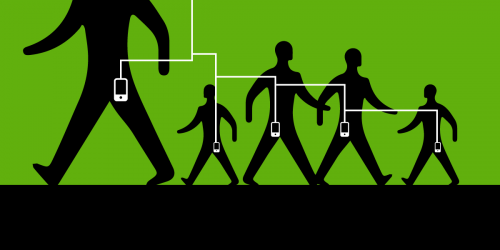
On January 14 and 15, 2020, the German Federal Constitutional Court will be holding a hearing to reevaluate the Bundesnachrichtendienst (BND) Act, which gives the BND agency (similar to the National Security Agency in the United States) broad surveillance authority. The hearing comes after a coalition of media and activist...
Virginia Needs a Strong Anti-SLAPP Law to Stop Bogus Lawsuits
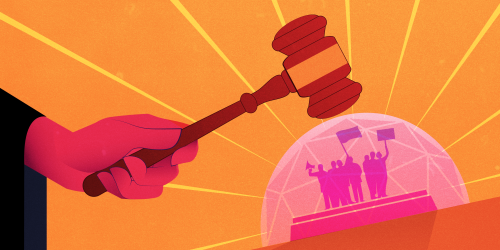
Update March 31: Earlier this month, the Virginia Legislature closed down without passing any version of an anti-SLAPP bill. We hope Virginia lawmakers will protect free speech in their state by passing such a bill in the next legislative session.Sometimes lawsuits get filed to chill speech or harass people, rather...
EFF Asks Supreme Court To Reverse Dangerous Rulings About API Copyrightability and Fair Use
Washington D.C.—The Electronic Frontier Foundation (EFF) today asked the U.S. Supreme Court to rule that functional aspects of Oracle’s Java programming language are not copyrightable, and even if they were, employing them to create new computer code falls under fair use protections.The court is reviewing a long-running lawsuit...
Ten Questions—And Answers—About the California Consumer Privacy Act
You may have heard from a lot of businesses telling you that they’ve updated their privacy policies because of a new law called the California Consumer Privacy Act. But what’s actually changed for you?EFF has spent the past year defending this law in the California legislature, but we realize...

