



New CBP Border Device Search Policy Still Permits Unconstitutional Searches
U.S. Customs and Border Protection (CBP) issued a new policy on border searches of electronic devices that's full of loopholes and vague language and that continues to allow agents to violate travelers’ constitutional rights. Although the new policy contains a few improvements over rules first published nine years...

Court Recognizes First Amendment Right to Anonymity Even After Speakers Lose Lawsuits
Update: In August 2018, the district court hearing the case ruled that Doe could maintain his anonymity, finding that the likely harm that would result from identifying Doe outweighed the public's interest in learning his identity. You can read the decision here.Anonymous online speakers may be able to keep...

Deep Dive: DHS and CBP Nominees’ Unsatisfying Responses to Senators’ Questions on Border Device Searches
Two of President Trump’s top homeland security nominees faced tough questioning from Sens. Ron Wyden (D-OR) and Rand Paul (R-KY) about the civil liberties implications of border searches of digital devices during their confirmation processes. In this deep-dive legal analysis, we dissect the written responses of Kirstjen Nielsen and...
When Tweets Are Governmental Business, Officials Don't Get to Pick and Choose Who Gets To Receive, Comment On, And Reply to Them. That Goes For the President, Too
We’ve taken a stand for the First Amendment rights of individuals to receive and comment on social media posts from governmental officials and agencies. We’ve received a lot of good questions about why we believe that public servants—mayors, sheriffs, senators, even President Donald Trump—can’t block people...
Court Rules Platforms Can Defend Users’ Free Speech Rights, But Fails to Follow Through on Protections for Anonymous Speech
A decision by a California appeals court on Monday recognized that online platforms can fight for their users’ First Amendment rights, though the decision also potentially makes it easier to unmask anonymous online speakers.
Yelp v. Superior Court grew out of a defamation case brought in 2016 by...

Appeals Court’s Disturbing Ruling Jeopardizes Protections for Anonymous Speakers
A federal appeals court has issued an alarming ruling that significantly erodes the Constitution’s protections for anonymous speakers—and simultaneously hands law enforcement a near unlimited power to unmask them.
The Ninth Circuit’s decision in U.S. v. Glassdoor, Inc. is a significant setback for the First Amendment. The ability...
20 Years of Protecting Intermediaries: Legacy of 'Zeran' Remains a Critical Protection for Freedom of Expression Online
This article first appeared on Nov. 10 on Law.com.At the Electronic Frontier Foundation (EFF), we are proud to be ardent defenders of §230. Even before §230 was enacted in 1996, we recognized that all speech on the Internet relies upon intermediaries, like ISPs, web hosts, search engines, and social...
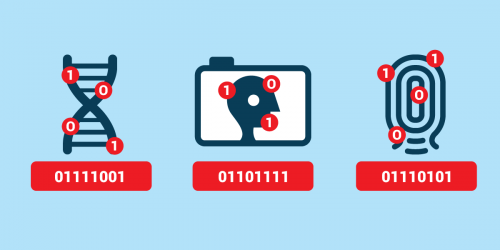
TSA Plans to Use Face Recognition to Track Americans Through Airports
The “PreCheck” program is billed as a convenient service to allow U.S. travelers to “speed through security” at airports. However, the latest proposal released by the Transportation Security Administration (TSA) reveals the Department of Homeland Security’s greater underlying plan to collect face images and iris scans on a...
What if You Had to Worry About a Lawsuit Every Time You Linked to an Image Online?
A photographer and a photo agency are teaming up to restart a legal war against online linking in the United States.
When Internet users browse websites containing images, those images often are retrieved from third-parties, rather than the author of the website. Sometimes, unbeknownst to the website author, the...

Deputy Attorney General Rosenstein’s “Responsible Encryption” Demand is Bad and He Should Feel Bad
Deputy Attorney General Rod Rosenstein delivered a speech on Tuesday about what he calls “responsible encryption” today. It misses the mark, by far.
Rosenstein starts with a fallacy, attempting to convince you that encryption is unprecedented:
Our society has never had a system where evidence of criminal...

