


Will the Equifax Data Breach Finally Spur the Courts (and Lawmakers) to Recognize Data Harms?
This summer 143 million Americans had their most sensitive information breached, including their name, addresses, social security numbers (SSNs), and date of birth. The breach occurred at Equifax, one of the three major credit reporting agencies that conducts the credit checks relied on by many industries, including landlords, car lenders,...
EFF Asks U.S. Court to Bar Enforcement of Canada’s Global Takedown Order
Should a Canadian court be able to prevent U.S.-based Internet users from viewing search results based on an alleged violation of Canadian law, even if those search results are legal in the United States?
We don’t think so. That’s why on Monday EFF asked a federal trial court...

Why the Ninth Circuit Got It Wrong on National Security Letters and How We’ll Keep Fighting
In a disappointing opinion issued on Monday, the Ninth Circuit upheld the national security letter (NSL) statute against a First Amendment challenge brought by EFF on behalf of our clients CREDO Mobile and Cloudflare. We applaud our clients’ courage as part of a years-long court battle, conducted largely...

Third Circuit Declares First Amendment Right to Record Police
The First Amendment protects our right to use electronic devices to record on-duty police officers, according to a new ruling by the U.S. Court of Appeals for the Third Circuit in Fields v. Philadelphia. This right extends to anyone with a recording device, journalists and members of the...

Top Canadian Court Permits Worldwide Internet Censorship
A country has the right to prevent the world’s Internet users from accessing information, Canada’s highest court ruled on Wednesday.
In a decision that has troubling implications for free expression online, the Supreme Court of Canada upheld a company’s effort to force Google to de-list entire domains and...

Supreme Court Rejects Expansion of Government-Speech Doctrine In Tam Case
The Supreme Court’s unanimous decision in Matal v. Tam striking down the trademark non-disparagement requirement as unconstitutional is a big victory for the First Amendment. First, the Court strongly pushed back against the expansion of the government-speech doctrine, perhaps the biggest current threat to free speech jurisprudence. Second, the...
Why We're Suing the FBI for Records About Best Buy Geek Squad Informants
Law Enforcement Should Not Be Able to Bypass the Fourth Amendment to Search Your Devices
Sending your computer to Best Buy for repairs shouldn’t require you to surrender your Fourth Amendment rights. But that’s apparently what’s been happening when customers send their computers to a Geek Squad repair facility...

Wikimedia's Constitutional Challenges of NSA Upstream Surveillance Move Forward
A court ruling today allowing Wikimedia’s claims challenging the constitutionality of NSA’s Upstream surveillance to go forward is good news. It shows that the court—the U.S. Court of Appeals for the Fourth Circuit—is willing to take seriously the impact mass surveillance of the Internet...
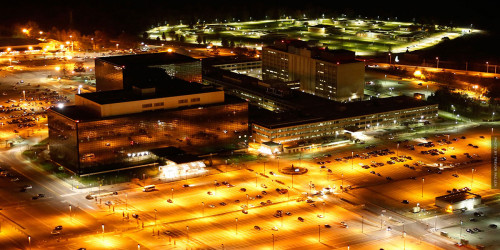
Judge Orders Government to Provide Evidence About Internet Surveillance
We're finally going to get some honesty on how the NSA spies on innocent Americans' communications.
A federal judge late last week in Jewel v. NSA, EFF’s landmark case against mass surveillance, ordered [PDF] the government to provide to it all relevant evidence necessary to prove or...

The FCC Pretends to Support Net Neutrality and Privacy While Moving to Gut Both
FCC Chairman Ajit Pai has proposed a plan to eliminate net neutrality and privacy for broadband subscribers. Of course, those protections are tremendously popular, so Chairman Pai and his allies have been forced to pay lip service to preserving them in “some form.” How do we know it’s...

