



Congress Can End the Digital Divide or Replace It with a Speed Chasm with Its Broadband Infrastructure Bill
The House Energy and Commerce Committee held its first hearing on a major infrastructure bill called the “Leading Infrastructure for Tomorrow’s (LIFT) America Act,” which authorizes $45 billion in broadband infrastructure money. Such a massive infusion of federal dollars would reshape the United States communications market and help put the...

Broadband Monopolies Are Acting Like Old Phone Monopolies. Good Thing Solutions to That Problem Already Exist
The future of competition in high-speed broadband access looks bleak. A vast majority of homes only have their cable monopoly as their choice for speeds in excess of 100 mbps and small ISPs and local governments are carrying the heavy load of deploying fiber networks that surpass gigabit cable networks....

Seventh Circuit Dodges an Opportunity to Protect Travelers from Invasive Border Searches of Electronic Devices
The U.S. Court of Appeals for the Seventh Circuit in United States v. Wanjiku missed an opportunity to protect travelers’ privacy rights and check the government’s ability to conduct invasive border searches of electronic devices.EFF, along with the ACLU, filed an amicus brief in the case arguing that...

Why Has San Francisco Allowed Comcast and AT&T to Dictate Its Broadband Future (Or Lack Thereof)?
American cities across the country face the same problem: major private Internet providers, facing little in the way of competition, refusing to invest and upgrade their networks to all residents. But not every city has gone through the trouble to analyze the problem, come up with a solution, and still...
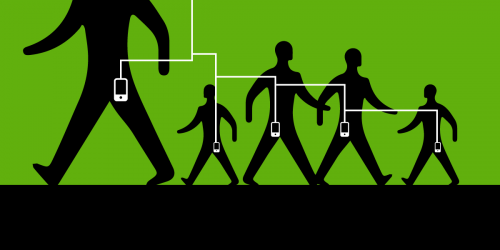
Massachusetts Court Blocks Warrantless Access to Real-Time Cell Phone Location Data
There's heartening news for our location privacy out of Massachusetts this week. The Supreme Judicial Court, the state's highest court, ruled that police access to real-time cell phone location data—whether it comes from a phone company or from technology like a cell site simulator—intrudes on a person’s reasonable expectation...
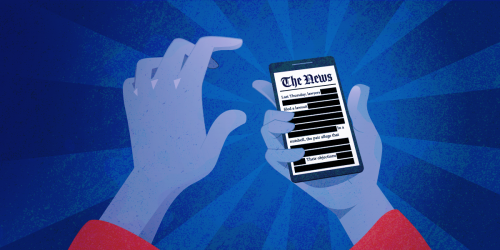
Julian Assange's Prosecution is about Much More Than Attempting to Hack a Password
The recent arrest of Wikileaks editor Julian Assange surprised many by hinging on one charge: a Computer Fraud and Abuse Act (CFAA) charge for a single, unsuccessful attempt to reverse engineer a password. This might not be the only charge Assange ultimately faces. The government can add more...
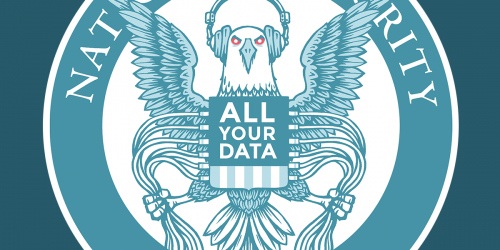
Government Fights to Trap EFF’s NSA Spying Case in a Catch-22
The U.S. government admits—and, of course, it’s common knowledge—that the NSA conducts mass, dragnet surveillance of hundreds of millions of Americans’ communications. It has done so via a series of different technical strategies and legal arguments for over 18 years. Yet the Justice Department insists that our legal fight against...

Your Fourth Amendment Rights Should Not be Limited by Terms of Service
Last week, we filed an amicus brief in U.S. v. Wilson, a federal appellate case, in which we argued that email providers’ terms of service can’t limit your Fourth Amendment rights. This is the second brief we’ve filed in less than a year addressing this important...

EFF, Coalition Urge Supreme Court to Maintain Public Access to Government’s Use of Privately Developed Technology
Some of the most controversial technologies government agencies use to surveil the public or automate decisions about them are developed or overseen by private parties.Whether it’s automated license plate readers (ALPRs), cell-site simulators, or algorithmic tools used by federal courts and other agencies to make decisions about people’s life and...
National Emergencies: Constitutional and Statutory Restrictions on Presidential Powers
When a president threatens to exercise the power to declare a national emergency, our system of checks and balances faces a crucial test. With President Trump threatening such a declaration in order to build his proposed physical border wall, that test could be an important one that could quickly implicate...

