


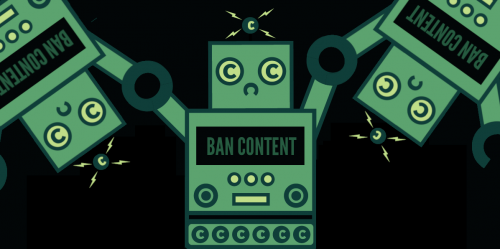
Copyright Filters Are On a Collision Course With EU Data Privacy Rules
The European Union’s controversial new copyright rules are on a collision course with EU data privacy rules. The GDPR guards data protection, privacy, and other fundamental rights in the handling of personal data. Such rights are likely to be affected by an automated decision-making system that’s guaranteed to be used,...

EFF to Ninth Circuit: Border Searches of Electronic Devices Require a Warrant
Although the Ninth Circuit issued a strong opinion last year in favor of digital privacy rights at the border, EFF filed an amicus brief [PDF] in a new case urging the court to go a step further. The Ninth Circuit should finally hold that the Fourth Amendment requires...

EFF to Supreme Court: Criminal Immigration Statute Threatens Free Speech Online
EFF is urging the U.S. Supreme Court to strike down a law that poses a serious threat to online speech by criminalizing speech that “encourages” unlawful immigration. EFF filed an amicus brief on behalf of itself and Immigrants Rising, the Internet Archive, and Daphne Keller.The case,...

Genetic Genealogy Company GEDmatch Acquired by Company With Ties to FBI & Law Enforcement—Why You Should Be Worried
This week, GEDmatch, a genetic genealogy company that gained notoriety for giving law enforcement access to its customers’ DNA data, quietly informed its users it is now operated by Verogen, Inc., a company expressly formed two years ago to market “next-generation [DNA] sequencing” technology to crime labs....

The FCC Is Opening up Some Very Important Spectrum for Broadband
Decisions about who gets to use the public airwaves and how they use it impact our lives every day. From the creation of WiFi routers to the public auctions that gave us more than two options for our cell phone providers, the Federal Communications Commission (FCC)’s decisions reshape our technological...

Federal Judge Issues Historic Opinion for Digital Privacy at the Border
In a historic opinion on privacy at the border, a federal judge this week recognized that international travelers have significant privacy interests in their digital data and ruled that suspicionless electronic device searches at U.S. ports of entry violate the Fourth Amendment. U.S. District Court Judge Denise Casper in...

What Reporters Should Look For in Latest Facebook Document Leak
NBC’s latest release of 7,000 pages of leaked internal Facebook documents has revealed how Facebook treated user data as leverage with external developers and spun anti-competitive moves as privacy improvements. As members of the press and civil society continue to inspect this massive volume of information in the...

EFF Urges Court to Reconsider Decision That Harms Internet Users’ Ability to Protect Themselves Online
Update 12/31/19: Unfortunately, the Ninth Circuit declined to rehear the case and endorsed its original holding. However, the three-judge panel issued a revised opinion that deleted problematic language in the original opinion that had stated, "[T]he criteria for blocking online material must be based on the characteristics of...

Inventergy Backs Away from Nuisance Lawsuit over GPS Patent
EasyTracGPS is a family-owned business that provides GPS tracking solutions to commercial shipping fleets. Recently, EasyTracGPS faced a litigation threat from Inventergy LBS, LLC, which accused it of infringing U.S. Patent No. 8,760,286. That patent supposedly claims a “[s]ystem and method for communication with a tracking device,” but like...

Patents Are About Sharing Information with the Public. Don’t Shroud Them in Secrecy.
Patents give their owners the power to stop people (and companies) from doing whatever the patent claims as an “invention” for twenty years. But that power doesn’t come for free: it’s a trade. In exchange for the right to sue others to stop using the invention, patent applicants have to...

