



EFF Asks Virginia Supreme Court to Rein in Indiscriminate Collection and Storage of License Plate Information
Like law enforcement agencies across the country, the police in Fairfax, Virginia, use automated license plate readers (ALPRs) to indiscriminately scan and record every passing car. The ALPRs don’t simply check for speeding, or outstanding tickets—instead, they store detailed information about the time, date, and location of each scan in...

Medical Device Repair Again Threatened With Copyright Claims
Medical providers face countless challenges in responding to the COVID pandemic, and copyright shouldn’t have to be one of them. Hundreds of volunteers came together to create the Medical Device Repair Database posted to the repair information website iFixit, providing medical practitioners and technicians an easy-to-use, annotated, and indexed...

You Have a First Amendment Right to Record the Police
Like the rest of the world, we are horrified by the videos of George Floyd’s murder. Once again, police brutality was documented by brave bystanders exercising their First Amendment rights. Their videos forcefully tell a painful truth that has further fueled a movement to demand an end to racism and...

EFF to Appeals Court: Reverse Legal Gotchas on Ordinary Internet Activities
In the Internet age, copyright decisions can have enormous consequences for all kinds of activities, because almost everything we do on the Internet involves making copies. And when courts make a mistake, they may create all sorts of unexpected legal risks. As we explained to the Eleventh Circuit yesterday, a...

Courts Issue Rulings in Two Cases Challenging Law Enforcement Searches of License Plate Databases
This week, the Ninth Circuit Court of Appeals issued an opinion in United States v. Yang, a case challenging the search of an automated license plate reader database under the Fourth Amendment. Although the court, citing EFF’s amicus brief, recognized ALPRs capture massive amounts of data on Americans...

Frontier’s Bankruptcy Reveals Why Big ISPs Choose to Deny Fiber to So Much of America
Even before it announced that it would seek Chapter 11 bankruptcy, Frontier had a well-deserved reputation for mismanagement and abusive conduct. In an industry that routinely enrages its customers, Frontier was the literal poster-child for underinvestment and neglect, an industry leader in outages and poor quality of service,...

The Constitution Does Not Allow Courts to Silence Criticism of Local Police Departments
EFF has filed an amicus brief urging the Tennessee Supreme Court to overturn a court order that would otherwise ban a victim from disclosing that she was subject to domestic violence or from speaking out about the police department’s handling of the investigation. The court order was issued under...

Judge Dismisses Twitter’s Lawsuit Over Its Rights to Publish Information About Government Surveillance Orders
A federal judge dismissed Twitter’s long-pending lawsuit last week over its right to share information about secret government surveillance orders for its users’ information. We hope that Twitter will continue its fight for transparency by appealing this decision.Background: The Government’s Limits on National Security TransparencyUsing surveillance authorities such as...
Why Is South Korea a Global Broadband Leader?
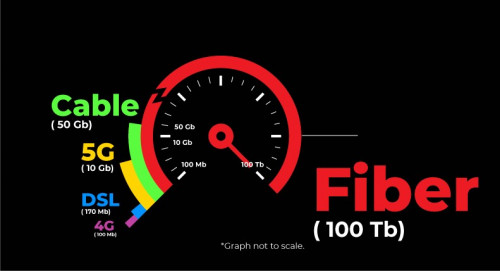
A universal fiber network that was completed years ago. Millions of 5G users. Some of the world’s fastest and cheapest broadband connections. South Korea has all of these, while other nations that have the same resources lag behind. How did South Korea become a global leader in the first place?...

Ninth Circuit: Private Social Media Platforms Are Not Bound by the First Amendment
The U.S. Court of Appeals for the Ninth Circuit recently held in Prager University v. Google that YouTube is not a government actor bound by First Amendment limits simply because it hosts a forum for public speech. Rather, as EFF argued in an amicus brief, YouTube is a...

