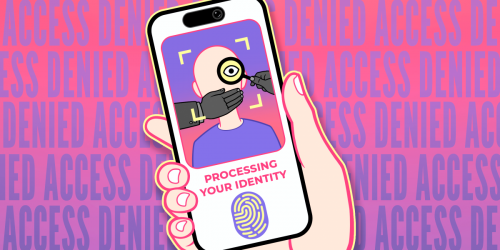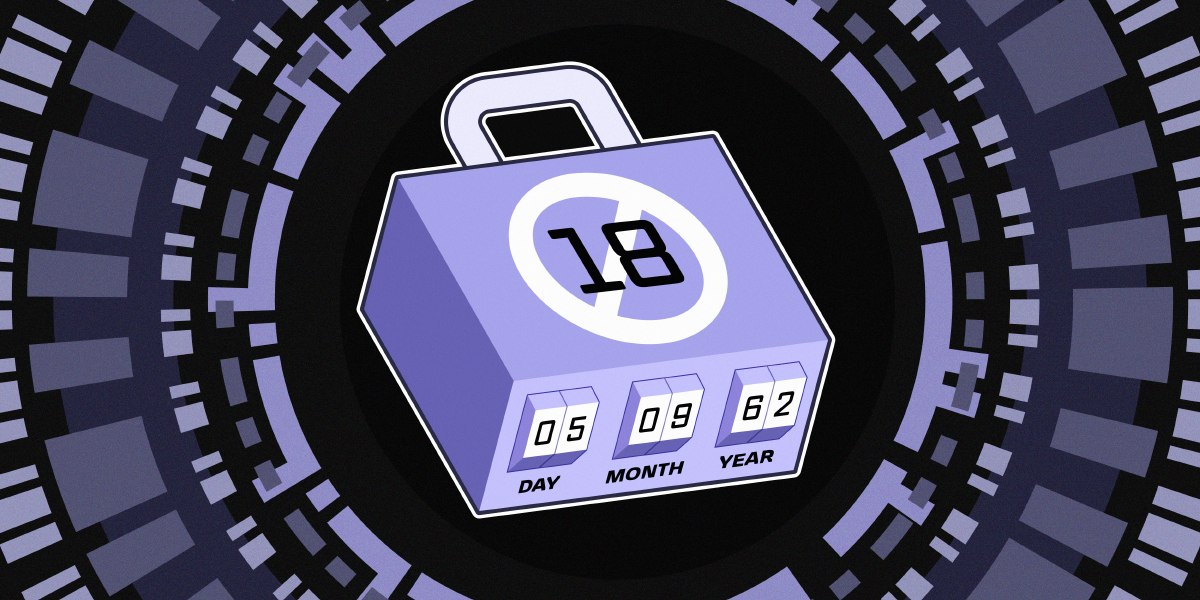
Age verification laws introduce surveillance systems that threaten everyone’s rights to speech and privacy, and introduce more harm than they seek to combat.
Within this context, it is no surprise that Google searches for Virtual Private Networks (VPNs) have skyrocketed. But as more states and countries pass age verification laws, it is crucial to recognize the broader implications these measures have on privacy, free speech, and access to information. While VPNs may be able to disguise the source of your internet activity, they are not foolproof—nor should they be necessary to access legally protected speech.
A VPN routes all your network traffic through an "encrypted tunnel" between your devices and the VPN server. The traffic then leaves the VPN to its ultimate destination, masking your original IP address. From a website's point of view, it appears your location is wherever the VPN server is. A VPN should not be seen as a tool for anonymity. While it can protect your location from some companies, a disreputable VPN service might deliberately collect personal information or other valuable data. There are many other ways companies may track you while you use a VPN, including GPS, web cookies, mobile ad IDs, tracking pixels, or fingerprinting.
With varying mandates across different regions, it will become increasingly difficult for VPNs to effectively circumvent these age verification requirements because each state or country may have different methods of enforcement and different types of identification checks, such as government-issued IDs, third-party verification systems, or biometric data. As a result, VPN providers will struggle to keep up with these constantly changing laws and ensure users can bypass the restrictions, especially as more sophisticated detection systems are introduced to identify and block VPN traffic.
The ever-growing conglomeration of age verification laws poses significant challenges for users trying to maintain anonymity online, and have the potential to harm us all—including the young people they are designed to protect.
Can VPNs Be Banned?
Unsurprisingly, politicians have now discovered that people are using Virtual Private Networks (VPNs) to protect their privacy and bypass these invasive laws. Their solution so far has been: to ban uses of VPNs.
For example, in 2025, Wisconsin lawmakers escalated their war on privacy by targeting VPNs in the name of “protecting children” in A.B. 105/S.B. 130. It’s an age verification bill that requires all websites distributing material that could conceivably be deemed “sexual content” to both implement an age verification system and also to block the access of users connected via VPN. Another proposed Michigan bill requires “An internet service provider providing internet service in this state [to] actively monitor and block known circumvention tools.” Circumvention tools being: VPNs.
This follows a notable pattern: As we’ve explained previously, lawmakers, prosecutors, and activists in conservative states have worked for years to aggressively expand the definition of “harmful to minors” to censor a broad swath of content: diverse educational materials, sex education resources, art, and even award-winning literature.
Here's Why This Is A Terrible Idea
VPNs mask your real location by routing your internet traffic through a server somewhere else. When you visit a website through a VPN, that website only sees the VPN server's IP address, not your actual location. It's like sending a letter through a P.O. box so the recipient doesn't know where you really live.
So when a state demands that websites "block VPN users from X State," they're asking for something that's technically impossible. Websites have no way to tell if a VPN connection is coming from Milwaukee, Michigan, or Mumbai. The technology just doesn't work that way.
Websites subject to this proposed law are left with this choice: either cease operation in the state, or block all VPN users, everywhere, just to avoid legal liability in the state. One state's terrible law could break VPN access for the entire internet, and the unintended consequences of this provision would far outweigh any theoretical benefit.
It’s A Privacy Nightmare
Here's what happens if VPNs get blocked: everyone has to verify their age by submitting government IDs, biometric data, or credit card information directly to websites—without any encryption or privacy protection.
We already know how this story ends. Companies get hacked. Data gets breached. And suddenly your real name is attached to the websites you visited, stored in some poorly-secured database, waiting for the inevitable leak. This has already happened, and is not a matter of if but when. And when it does, the repercussions will be huge.
Forcing people to give up their privacy to access legal content is the exact opposite of good policy. It's surveillance dressed up as safety.
It Won’t Even Work
Let's say a state somehow manages to pass a VPN ban. Here's what will actually happen:
People who want to bypass it will use non-commercial VPNs, open proxies, or cheap virtual private servers that the law doesn't cover. They'll find workarounds within hours. The internet always routes around censorship.
Even in a fantasy world where every website successfully blocked all commercial VPNs, people would just make their own. You can route traffic through cloud services like AWS or DigitalOcean, tunnel through someone else's home internet connection, use open proxies, or spin up a cheap server for less than a dollar.
Meanwhile, everyone else (businesses, students, journalists, abuse survivors, regular people who just want privacy) will have their VPN access impacted. The law will accomplish nothing except making the internet less safe and less private for users.
Nonetheless, as we’ve mentioned previously, while VPNs may be able to disguise the source of your internet activity, they are not foolproof—nor should they be necessary to access legally protected speech. Like the larger age verification legislation they are a part of, VPN-blocking provisions simply don't work. They harm millions of people and they set a terrifying precedent for government control of the internet. More fundamentally, legislators need to recognize that age verification laws themselves are the problem. They don't work, they violate privacy, they're trivially easy to circumvent, and they create far more harm than they prevent.
A False Dilemma
People have (predictably) turned to VPNs to protect their privacy as they watch age verification mandates proliferate around the world. Instead of taking this as a sign that maybe mass surveillance isn't popular, lawmakers have decided the real problem is that these privacy tools exist at all and are trying to ban the tools that let people maintain their privacy.
Let's be clear: lawmakers need to abandon this entire approach. The answer to "how do we keep kids safe online" isn't "destroy everyone's privacy." It's not "force people to hand over their IDs to access legal content." And it's certainly not "ban access to the tools that protect journalists, activists, and abuse survivors.”
If lawmakers genuinely care about young people's well-being, they should invest in education, support parents with better tools, and address the actual root causes of harm online. What they shouldn't do is wage war on privacy itself. Attacks on VPNs are attacks on digital privacy and digital freedom. And this battle is being fought by people who clearly have no idea how any of this technology actually works.
What Can You Do?
If you are navigating protecting your privacy or want to learn more about VPNs, EFF provides a comprehensive guide on using VPNs and protecting digital privacy–a valuable resource for anyone looking to use these tools.
No one should have to hand over their driver’s license just to access free websites. EFF has long fought against mandatory age verification laws, from the U.S. to Canada and Australia. And under the context of weakening rights for already vulnerable communities online, politicians around the globe must acknowledge these shortcomings and explore less invasive approaches to protect all people from online harms.
Dozens of bills currently being debated by state and federal lawmakers could result in dangerous age verification mandates. We will resist them. We must stand up against these types of laws, not just for the sake of free expression, but to protect the free flow of information that is essential to a free society. Contact your state and federal legislators, raise awareness about the unintended consequences of these laws, and support organizations that are fighting for digital rights and privacy protections alongside EFF, such as the ACLU, Woodhull Freedom Foundation, and others.