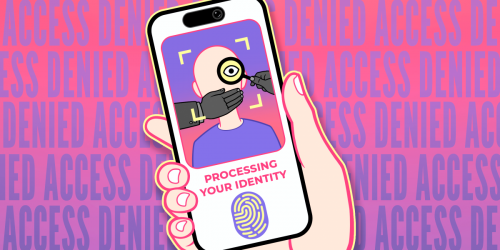
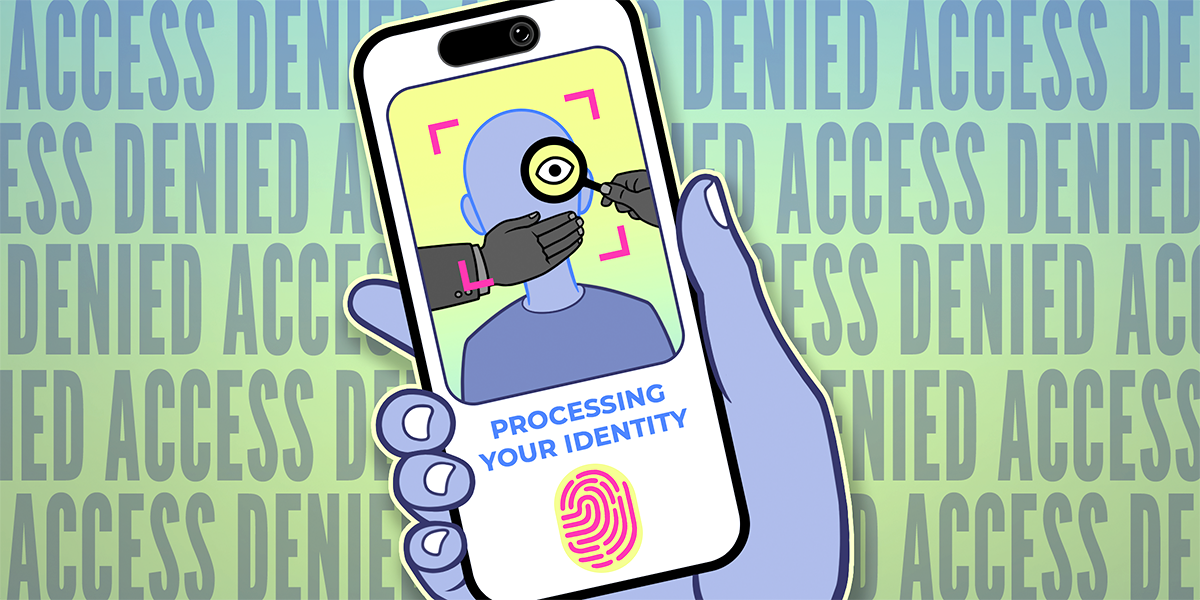
Comprehensive data privacy legislation is the best way to hold tech companies accountable in our surveillance age, including for harm they do to children. Well-written privacy legislation has the added benefit of being constitutional—unlike the flurry of laws that restrict content behind age verification requirements that courts have recently blocked. Such misguided laws do little to protect kids while doing much to invade everyone’s privacy and speech.
The answer is to re-focus attention on comprehensive data privacy legislation, which would address the massive collection and processing of personal data that is the root cause of many problems online. Just as important, it is far easier to write data privacy laws that are constitutional. Laws that lock online content behind age gates can almost never withstand First Amendment scrutiny because they frustrate all internet users’ rights to access information and often impinge on people’s right to anonymity.
It Is Comparatively Easy to Write Data Privacy Laws That Are Constitutional
EFF has long pushed for strong comprehensive commercial data privacy legislation and continues to do so. Data privacy legislation has many components. But at its core, it should minimize the amount of personal data that companies process, give users certain rights to control their personal data, and allow consumers to sue when the law is violated.
EFF has argued that privacy laws pass First Amendment muster when they have a few features that ensure the law reasonably fits its purpose. First, they regulate the commercial processing of personal data. Second, they do not impermissibly restrict the truthful publication of matters of public concern. And finally, the government’s interest and law’s purpose is to protect data privacy; expand the free expression that privacy enables; and protect the security of data against insider threats, hacks, and eventual government surveillance. If so, the privacy law will be constitutional if the government shows a close fit between the law’s goals and its means.
EFF made this argument in support of the Illinois Biometric Information Privacy Act (BIPA), and a law in Maine that limits the use and disclosure of personal data collected by internet service providers. BIPA, in particular, has proved wildly important to biometric privacy. For example, it led to a settlement that prohibits the company Clearview AI from selling its biometric surveillance services to law enforcement in the state. Another settlement required Facebook to pay hundreds of millions of dollars for its policy (since repealed) of extracting faceprints from users without their consent.
Courts have agreed. Privacy laws that have been upheld under the First Amendment, or cited favorably by courts, include those that regulate biometric data, health data, credit reports, broadband usage data, phone call records, and purely private conversations.
The Supreme Court, for example, has cited the federal 1996 Health Insurance Portability and Accountability Act (HIPAA) as an example of a “coherent” privacy law, even when it struck down a state law that targeted particular speakers and viewpoints. Additionally, when evaluating the federal Wiretap Act, the Supreme Court correctly held that the law cannot be used to prevent a person from publishing legally obtained communications on matters of public concern. But it otherwise left in place the wiretap restrictions that date back to 1934, designed to protect the confidentiality of private conversations.
Support Comprehensive Privacy Legislation That Will Stand the Test of Time
Instead of requiring online services to collect, analyze, and store our most sensitive and immutable data—exposing us to massive harms, both online and off—lawmakers should focus on passing laws that will have a lasting impact for adults and young people alike: strong, well-written comprehensive data privacy.