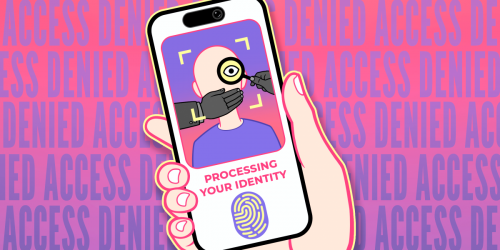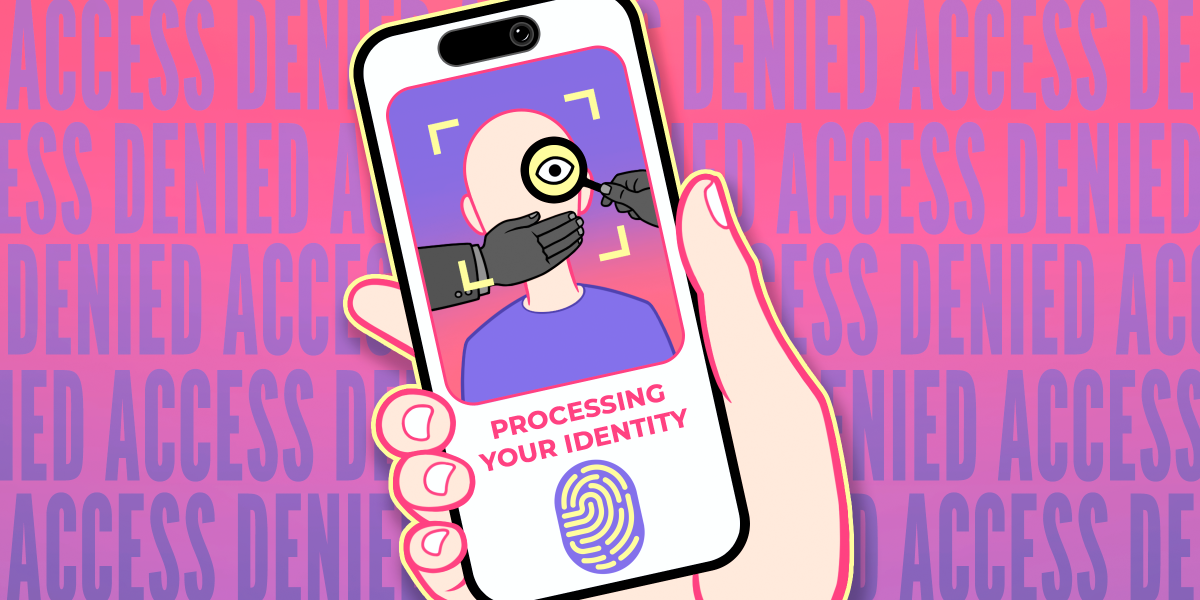
At its core, age-restrictive legislation is a harmful censorship regime masquerading as an online safety measure. But it's important to know that this kind of mandate doesn't just affect young people. After all, in order to restrict access for one select age group, platforms must require every user to prove they are old enough to enter.
There are millions of U.S. adults who could be effectively locked out of much of the internet by draconian age verification measures because they lack valid government ID. Many more, including undocumented people, unhoused people, trans and nonbinary individuals, and survivors of abuse, have good reasons to keep their real-world identities separate from their online lives. Age gates risk turning huge parts of the web into closed spaces for the “verified,” cutting off access to protected speech and vital information.
These laws also hand governments the power to arbitrarily decide what speech is “harmful.” These definitions are often vague, subjective, and unscientific, causing platforms to over-censor user content (or shut down entirely) to avoid punishment. Indeed, we’ve already seen platforms respond to age-verification mandates in the U.S. and abroad by censoring or blocking things like LGBTQ+ resources, reproductive health information, global news, and political organizing spaces.
In the U.S., anonymity is a fundamental cornerstone of free expression. Around the world, it has protected journalists, whistleblowers, and activists. But age verification laws threaten to tie your most sensitive, immutable data—your name, face, birthday, and home address—to your online activity, ruining your anonymity in the process.
Blocking entire communities or resources because of their subject matter does not make the internet safer; rather, it silences the people who rely on those online spaces for life-saving support, education, or safety.