

553,000,000 Reasons Not to Let Facebook Make Decisions About Your Privacy
Another day, another horrific Facebook privacy scandal. We know what comes next: Facebook will argue that losing a lot of our data means bad third-party actors are the real problem that we should trust Facebook to make more decisions about our data to protect against them. If history is any...

First Circuit Upholds First Amendment Right to Secretly Audio Record the Police
EFF applauds the U.S. Court of Appeals for the First Circuit for holding that the First Amendment protects individuals when they secretly audio record on-duty police officers. EFF filed an amicus brief in the case, Martin v. Rollins, which was brought by the ACLU of Massachusetts on behalf...

Maine Should Take this Chance to Defund the Local Intelligence Fusion Center
Maine state representative Charlotte Warren has introduced LD1278 (HP938), or An Act To End the Maine Information and Analysis Center Program, a bill that would defund the Maine Information and Analysis Center (MIAC), also known as Maine’s only fusion center. EFF is happy to support this bill in hopes...
Ethos Capital Is Grabbing Power Over Domain Names Again, Risking Censorship-For-Profit. Will ICANN Intervene?
Ethos Capital is at it again. In 2019, this secretive private equity firm that includes insiders from the domain name industry tried to buy the nonprofit that runs the .ORG domain. A huge coalition of nonprofits and users spoke out. Governments expressed alarm, and ICANN (the entity in...

Content Moderation Is A Losing Battle. Infrastructure Companies Should Refuse to Join the Fight
It seems like every week there’s another Big Tech hearing accompanied by a flurry of mostly bad ideas for reform. Two events set last week’s hubbub apart, both involving Facebook. First, Mark Zuckerberg took a new step in his blatant effort to use 230 reform to entrench Facebook’s dominance....
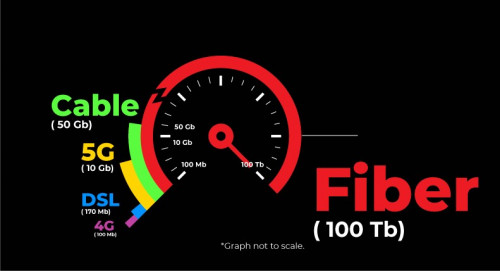
The FCC Wants Your Broadband Horror Stories: You Know What to Do
At long last, the Federal Communications Commission (FCC) is asking for your broadband experiences. When you submit your experiences here, you will let the FCC know whether you have been adequately served by your internet service provider (ISP). The feedback you provide informs future broadband availability as well as...
Tenth Circuit Misses Opportunity to Affirm the First Amendment Right to Record the Police
We are disappointed that the U.S. Court of Appeals for the Tenth Circuit this week dodged a critical constitutional question: whether individuals have a First Amendment right to record on-duty police officers.EFF had filed an amicus brief in the case, Frasier v. Evans, asking the court to affirm...

EFF to Court: Don’t Let Pseudo-IP Thwart Speech, Innovation, and Competition
The threats to online expression and innovation keep coming. One that’s flown under the radar is a misguided effort to convince the Third Circuit Court of Appeals to allow claims based on the “right of publicity,” (i.e., the right to control the commercial exploitation of your persona) because some people...
Schools Can’t Punish Students for Off-Campus Speech, Including Social Media Posts, EFF Tells Supreme Court
Washington, D.C.—The Electronic Frontier Foundation (EFF) urged the Supreme Court to rule that when students post on social media or speak out online while off campus, they are protected from punishment by school officials under the First Amendment—an important free speech principle amid unprecedented, troubling ...

Google Is Testing Its Controversial New Ad Targeting Tech in Millions of Browsers. Here’s What We Know.
Update, April 9, 2021 : We've launched Am I FLoCed, a new site that will tell you whether your Chrome browser has been turned into a guinea pig for Federated Learning of Cohorts or FLoC, Google’s latest targeted advertising experiment. Today, Google launched an “origin trial” of Federated...

