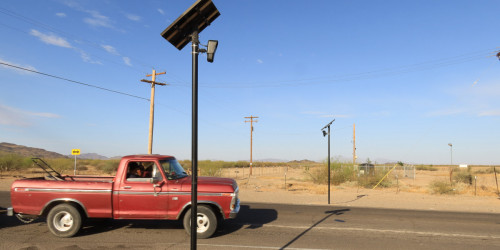


Do automated license plate readers (ALPRs) have any place in our communities? That question has been a hot topic in city council meetings, community conversations, and news coverage around the country for months. This past election day, a couple of U.S communities took it further: to the ballot.
And overwhelmingly, voters decided that, no, these devices should not be deployed on our streets. We agree!
In Maine, the coastal community of York voted to remove the town’s existing ALPR cameras and require that any future proposed installations receive voter approval before proceeding. The local initiative ended up on the ballot after constituents gathered enough signatures on a citizens’ petition for a local ordinance. On Election Day, nearly three-quarters of York voters supported the ban.
Thousands of miles away, voters in League City, Texas also voted against allowing the local police department to continue use of ALPR cameras. That vote was formally approved on November 17, which began a 72-hour window to remove the cameras. Since the election, the cameras have been “bagged” or covered to prevent the collection of data.
At least one city also decided to expand protections afforded to their residents when it comes to the use of surveillance technology. In Pflugerville, Texas, Proposition B passed, now requiring that the City Charter be amended to include “protections governing the collection, use, retention, and oversight of data, facial recognition, and surveillance technologies.” It also requires “a responsible artificial intelligence framework.”
While every municipality has different rules for how to get a local ordinance placed on the ballot, banning use and securing the removal of surveillance tools locally is a powerful way of protecting your community against devices and data collection that goes far beyond your town lines.
Surveillance is a choice, not a mandate, and our communities have the power to refuse it. EFF has supported local communities around the country over the last few years in advocating against the procurement of surveillance technologies in their cities, counties, and states. These victories at the ballot box and in city councils show that when mass surveillance is presented as a policy choice, not a technical necessity, communities can and do reject it.
Do you know what surveillance tools are being used by your local police departments? Check out the Atlas of Surveillance to learn more about the tools deployed in your city, and sign up to volunteer if you want to push for more transparency across the country.