

Certbot's Website Gets a Refresh
Certbot has a brand new website! Today we’ve launched a major update that will help Certbot’s users get started even more quickly and easily.Certbot is a free, open source software tool for enabling HTTPS on manually-administered websites, by automatically deploying Let’s Encrypt certificates. Since we introduced it in 2016,...
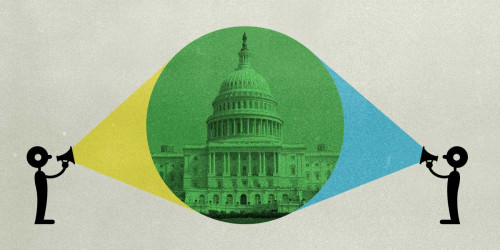
EFF's Recommendations for Consumer Data Privacy Laws
Strong privacy legislation in the United States is possible, necessary, and long overdue. EFF emphasizes the following concrete recommendations for proposed legislation regarding consumer data privacy.Three Top PrioritiesFirst, we outline three of our biggest priorities: avoiding federal preemption, ensuring consumers have a private right of action, and using non-discrimination rules...

Congress Should Pass the Protecting Data at the Border Act
Under the bipartisan Protecting Data at the Border Act, border officers would be required to get a warrant before searching a traveler’s electronic device. Last month, the bill was re-introduced into the U.S. Senate by Sen. Ron Wyden (D-Ore.) and Sen. Rand Paul (R-Ky.). It is co-sponsored by...

Details of Justice Department Efforts To Break Encryption of Facebook Messenger Must Be Made Public, EFF Tells Court
San Francisco—The Electronic Frontier Foundation, ACLU and Stanford cybersecurity scholar Riana Pfefferkorn asked a federal appeals court today to make public a ruling that reportedly forbade the Justice Department from forcing Facebook to break the encryption of a communications service for users.Media widely reported last fall that a...

Experts Warn Congress: Proposed Changes to Patent Law Would Thwart Innovation
It should be clear now that messing around with Section 101 of the Patent Act is a bad idea. A Senate subcommittee has just finished hearing testimony about a bill that would wreak havoc on the patent system. Dozens of witnesses have testified, including EFF Staff Attorney Alex Moss....

Social Media Platforms Increase Transparency About Content Removal Requests, But Many Keep Users in the Dark When Their Speech Is Censored, EFF Report Shows
San Francisco and Tunis, Tunisia—While social media platforms are increasingly giving users the opportunity to appeal decisions to censor their posts, very few platforms comprehensively commit to notifying users that their content has been removed in the first place, raising questions about their accountability and transparency, the Electronic...

EFF to UN: Ola Bini's Case Highlights The Dangers of Vague Cybercrime Law
For decades, journalists, activists and lawyers who work on human rights issues around the world have been harassed, and even detained, by repressive and authoritarian regimes seeking to halt any assistance they provide to human rights defenders. Digital communication technology and privacy-protective tools like end-to-end encryption have made this work...

How LBS Innovations Keeps Trying to Monopolize Online Maps
Stupid Patent of the MonthFor years, the Eastern District of Texas (EDTX) has been a magnet for lawsuits filed by patent trolls—companies who make money with patent threats, rather than selling products or services. Technology companies large and small were sued in EDTX every week. We’ve written about how that...

EFF’s Newest Advisory Board Member: Michael R. Nelson
EFF is proud to announce our newest member of our already star-studded advisory board: Michael R. Nelson. Michael has worked on Internet-related global public policy issues for more than 30 years, including working on technology policy in the U.S. Senate and the Clinton White House.Michael’s broad expertise in many...

California: No Face Recognition on Body-Worn Cameras
EFF has joined a coalition of civil rights and civil liberties organizations to support a California bill that would prohibit law enforcement from applying face recognition and other biometric surveillance technologies to footage collected by body-worn cameras.About five years ago, body cameras began to flood into police and sheriff departments...

