


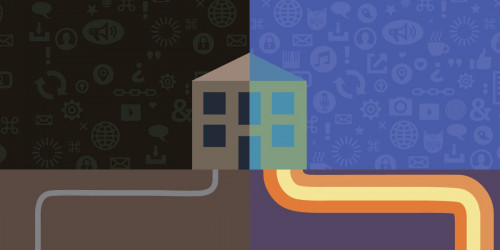
Social Distancing, The Digital Divide, and Fixing This Going Forward
Social distancing, work from home, shelter in place—these are all strategies employed in response to the COVID-19 epidemic. Americans who have jobs allowing them to engage in social distancing are very dependent on their Internet connection. That dependence is only going to grow as time goes on. As parents depend...

User Privacy Champion Ashkan Soltani Joins EFF Advisory Board
EFF is proud to announce that independent researcher and technologist Ashkan Soltani has joined our advisory board, where he will share his expertise in privacy and security. Ashkan is a long-time EFF friend and collaborator whose research has informed our efforts to protect users from NSA backdoors, shine...

The California Public Records Act Is an Essential Right, Even During a State of Emergency
As Californians shelter-at-home up and down the state, the journalists and citizen watchdogs who file California Public Records Act (CPRA) requests know that trade-offs must be made. We know that local agencies may be understaffed at this time and that they may be slow to respond to our letters. They...

EFF and COVID-19: Protecting Openness, Security, and Civil Liberties
EFF and its members work to ensure that technology supports freedom, justice, and innovation for all the people of the world. The COVID-19 pandemic has made obvious how important the Internet and digital tools are to our lives and how vital it is that we maintain an open and secure...

Governments Haven’t Shown Location Surveillance Would Help Contain COVID-19
Governments around the world are demanding new dragnet location surveillance powers to contain the COVID-19 outbreak. But before the public allows their governments to implement such systems, governments must explain to the public how these systems would be effective in stopping the spread of COVID-19. There’s no questioning the need...
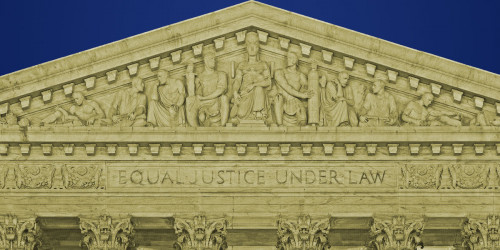
The Time Is Now: The Supreme Court Must Allow Live Cameras
At a time when government officials are justifiably limiting in-person gatherings to slow the spread of COVID-19, the public should have access to essential government activities. The Supreme Court is no exception, which is why it must finally allow cameras in its courtroom.Responding to the health and safety concerns raised...

Embracing Open Science in a Medical Crisis
Responding to the threat of COVID-19, science advisers from twelve countries have signed on to an open letter urging scientific publishers to make all COVID-19 research freely available to the public through PubMed Central or the World Health Organization's COVID Database.This is an emergency call for open...

Governments Must Commit to Transparency During COVID-19 Crisis
As government officials at all levels move quickly to respond to COVID-19 and protect the public’s health, it is vital that they also safeguard the public’s ability to participate in and access information about those decisions, EFF and a coalition of more than 100 organizations wrote in a letter...

Face Surveillance Is Not the Solution to the COVID-19 Crisis
In the current moment, governments may be tempted to funnel scarce public health resources into the use of face recognition to curtail the spread of COVID-19. Public health crises, especially a global pandemic, may require extraordinary measures in favor of the public good—but invasive face surveillance is not in...
Right to Repair in Times of Pandemic
Entropy isn't just a word, it’s the (second) law (of thermodynamics): the idea that things tend towards chaos and brokenness. That’s why the Right to Repair is so close to our heart: fixing things is nothing less than the embodiment of the ancient struggle to wring order from...

