



IPR Process Saves 80 Companies From Paying For a Sports-Motion Patent
The importance of the US Patent Office’s “inter partes review” (IPR) process was highlighted in dramatic fashion yesterday. Patent appeals judges threw out a patent [PDF] that was used to sue more than 80 companies in the fitness, wearables, and health industries.
US Patent No. 7,454,002 was...

EFF vs IoT DRM, OMG!
What with the $400 juicers and the NSFW smart fridges, the Internet of Things has arrived at that point in the hype cycle midway between "bottom line" and "punchline." Hype and jokes aside, the reality is that fully featured computers capable of running any program are getting cheaper...

Twilio Demonstrates Why Courts Should Review Every National Security Letter
The list of companies who exercise their right to ask for judicial review when handed national security letter gag orders from the FBI is growing. Last week, the communications platform Twilio posted two NSLs after the FBI backed down from its gag orders. As Twilio’s accompanying blog post documents,...

The State of the Union: What Wasn’t Said
President Donald Trump’s first State of the Union address last night was remarkable for two reasons: for what he said, and for what he didn’t say.
The president took enormous pride last night in claiming to have helped “extinguish ISIS from the face of the Earth.”
But he...

Stupid Patent of the Month: Bigger Screen Patent Highlights a Bigger Problem
For more than three years now, we’ve been highlighting weak patents in our Stupid Patent of the Month series. Often we highlight stupid patents that have recently been asserted, or ones that show how the U.S. patent system is broken. This month, we’re using a pretty silly patent in...

¿El fin de una Internet libre, abierta e inclusiva?
Este artículo fue escrito por Edison Lanza, Relator Especial para la Libertad de Expresión de la Comisión Interamericana de Derechos Humanos.
En poco más de 20 años se hizo evidente el potencial de Internet para el ejercicio de las libertades, la educación, el impacto de las redes sociales; y...
Code Review Isn't Evil. Security Through Obscurity Is.
On January 25th, Reuters reported that software companies like McAfee, SAP, and Symantec allow Russian authorities to review their source code, and that "this practice potentially jeopardizes the security of computer networks in at least a dozen federal agencies." The article goes on to explain what source code review...

Private Censorship Is Not the Best Way to Fight Hate or Defend Democracy: Here Are Some Better Ideas
From Cloudflare’s headline-making takedown of the Daily Stormer last autumn to YouTube’s summer restrictions on LGBTQ content, there's been a surge in “voluntary” platform censorship. Companies—under pressure from lawmakers, shareholders, and the public alike—have ramped up restrictions on speech, adding new rules, adjusting their still-hidden algorithms and...

When Trading Track Records Means Less Privacy
Sharing your personal fitness goals—lowered heart rates, accurate calorie counts, jogging times, and GPS paths—sounds like a fun, competitive feature offered by today’s digital fitness trackers, but a recent report from The Washington Post highlights how this same feature might end up revealing not just where you are, where...
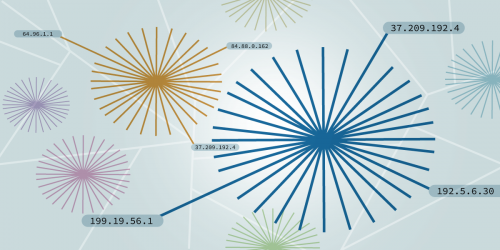
Europe's GDPR Meets WHOIS Privacy: Which Way Forward?
Europe's General Data Protection Regulation (GDPR) will come into effect in May 2018, and with it, a new set of tough penalties for companies that fail to adequately protect the personal data of European users. Amongst those affected are domain name registries and registrars, who are required by ICANN, the...

