

EFF Supports Tunisian Internet Agency in Protecting Free Expression Online
For years, Tunisians suffered in relative media silence as the Ben Ali regime curtailed digital rights, blocking websites and surveilling citizens. Then, thanks to the hard work of Tunisian free expression advocates who for many years worked to raise awareness of the country’s pervasive Internet controls, censorship fell...

Iranian Man-in-the-Middle Attack Against Google Demonstrates Dangerous Weakness of Certificate Authorities
Commentary by Seth Schoen and Eva Galperin
What’s worse than finding a worm in your apple? Finding half a worm.
What’s worse than discovering that someone has launched a man-in-the-middle attack against Iranian Google users, silently intercepting everything from email to search results and...

Join Us for "Patent Trolls and You: EFF Virtual Boot Camp for App Developers"
UPDATE: We held a very successful Boot Camp on Sept. 9! Thanks very much to our panelists and everyone who participated. We've recorded the panel, which you can access here. Continue to watch this space for additional resources for app developers and other innovators who have been the target...

An update on Paxfire and search redirection
By ICSI researchers Christian Kreibich, Nicholas Weaver and Vern Paxson, with Peter Eckersley and Cindy Cohn.
Two weeks ago, EFF published an analysis with researchers at Berkeley ICSI about the redirection of search traffic at a number of US ISPs. The company...
Troubling Brazilian Cybercrime Law Makes a Comeback
Some bad ideas just won't die. In 2008, the Brazilian Senate passed a cybercrime bill that would have limited freedom of expression and threatened privacy online. Strong public opposition, including a speech by then-President Luiz Inácio Lula da Silva in which he denounced the bill, prevented it...

Dangerous Cybercrime Treaty Pushes Surveillance and Secrecy Worldwide
As part of an emerging international trend to try to ‘civilize the Internet’, one of the world’s worst Internet law treaties--the highly controversial Council of Europe (CoE) Convention on Cybercrime--is back on the agenda. Canada and Australia are using the Treaty to introduce new invasive, online surveillance...
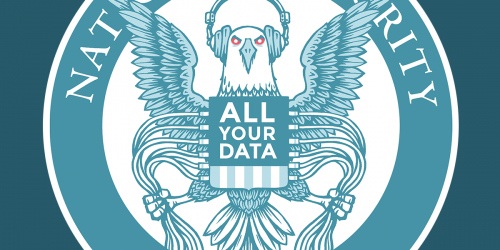
EFF’s Warrantless Wiretapping Cases Back in Court on August 31
More than five years ago, EFF filed the first lawsuit aimed at stopping the government's illegal mass surveillance of millions of ordinary Americans' private communications. Whistleblower evidence combined with news reports and Congressional admissions revealed that the National Security Agency (NSA) was tapped into AT&T’s domestic...
Why IP Addresses Alone Don't Identify Criminals
This spring, agents from Immigration and Customs Enforcement (ICE) executed a search warrant at the home of Nolan King and seized six computer hard drives in connection with a criminal investigation. The warrant was issued on the basis of an Internet Protocol (IP) address that traced back to...
Members-Only Speakeasy: Seattle
Current EFF members and donors are invited to join Senior Staff Attorneys Marcia Hofmann and Kurt Opsahl for drinks at a secret Seattle location on Wednesday, August 31st, to discuss that day's hearings on EFF's warrantless wiretapping cases before the 9th Circuit Court of Appeals. The court...

Members-Only Speakeasy: Seattle
Current EFF members and donors are invited to join Senior Staff Attorneys Marcia Hofmann and Kurt Opsahl for drinks at a secret Seattle location on Wednesday, August 31st, to discuss that day's hearings on EFF's warrantless wiretapping cases before the 9th Circuit Court of Appeals....

