Deeplinks Blog

Deeplinks Blog

Bernstein Institute for Human Rights Annual Symposium 2017

Governments around the world are cracking down on the space civil society needs to protect fundamental rights and freedoms. This year's annual Bernstein Institute for Human Rights conference will provide a rich analysis of the measures governments are using to silence dissent, while also examining legal strategies used by human...

Data Brokers: Don’t Let Your Data be Used For Human Rights Abuses

EFF, Amnesty International, Color of Change, the Center for Democracy and Technology, and our other coalition partners are urging data brokers to take a stand against government surveillance and discrimination based on religion, national origin, and immigration status.
As explained in a joint statement released today, data brokers collect...

Fair Use as Consumer Protection

Talking about fair use often means talking about your right to re-use existing copyrighted works in the process of making something new - to make remixes and documentaries, parodies, or even to build novel Internet search tools. But now that copyright-protected software is in almost everything (including our cars, our...

Copyright Law Versus Internet Culture

Throughout human history, culture has been made by people telling one another stories, building on what has come before, and making it their own. Every generation, every storyteller puts their own spin on old tales to reflect their own values and changing times.
This creative remixing happens today and...

Red pin on a map

Neal v. Fairfax County Police Department

In 2017, EFF urged the Supreme Court of Virginia to protect the state's residents from a police surveillance database created with automated license plate readers (ALPRs). Fairfax County Police Department uses ALPRs that read every license plate that goes by, and stores the records for up to a year. Harrison...

Fair Use: Journalism Can’t Succeed Without It

The idea that you don’t need a subject’s permission to report on them is fundamental to a free press. If a powerful or influential person, or company, could veto any coverage they don’t like, or make sure any embarrassing or incriminating statements disappear, there’d be little point to having a...

Shadow Regulation Withers In The Sunlight

Dot-Org Registry Suspends Secretive Copyright-Policing Plan
Yesterday, the group that runs the .org top-level domain announced that they will suspend their plans to create a new, private, problematic copyright enforcement system. That’s welcome news for tens of millions of nonprofits, charities, businesses, clubs, bloggers, and personal website owners...

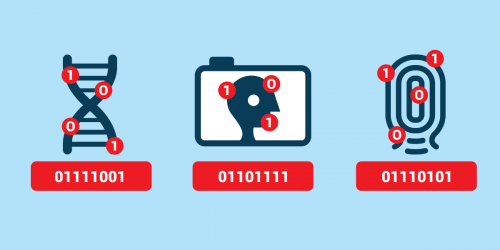
Protect Biometric Privacy in Montana

Update February 28, 2017: Unfortunately, the Montana House Judiciary Committee tabled H.B. 518 on February 27. We look forward to working to pass it next year.
Legislatures around the country are beginning to acknowledge the threat to our privacy presented by companies collecting and using our biometric information—the...

Privacy issue banner, a colorful graphical representation of a padlock

Congressional Oversight Committee Wants Warrants to Rein in Police Abuse of Cell-Site Simulators

A bipartisan Congressional committee’s recent report showcases troubling details about police abuse of cell-site simulators, and calls on Congress to pass laws ensuring that this powerful technology is only deployed with a court-issued probable cause warrant.
Cell-site simulators, often called IMSI catchers or Stingrays, masquerade as cell phone towers...

BWP Media v. Polyvore: It’s All About Control

Major entertainment companies are once again trying to expand copyright law to gain leverage over a wide variety of user-generated content sites. If they succeed, they would have a veto over Internet users’ access to the tools that allow us to remix, mashup, and participate in popular culture. EFF, along...

EFF to Copyright Office: Safe Harbors Work

The “notice-and-takedown” process for addressing online copyright infringement isn’t perfect: it’s often abused to remove lawful speech from the Internet. But it many cases this process, described in Section 512 of the Digital Millennium Copyright Act (DMCA), works pretty well—particularly because of the safe harbors that protect Internet services that...

Creativity and Innovation issue banner, a colorful graphical representation of a light bulb

EFF to Appeals Court: Protect Software Interoperability

An essential principle of copyright law is under threat: the principle that a copyright cannot grant a monopoly over the idea of adding up numbers, drawing a design specified by the user, or moving a robot arm using the designer's movement commands. We are all free to write our own...

Pages

Back to top

JavaScript license information