The Electronic Frontier Foundation and the ACLU of California joined forces with California State Sen. Joel Anderson (R-Alpine) on Tuesday to testify in favor of S.B. 712, a bill that would have allowed drivers to cover their license plates when parked in order to protect their travel patterns...
The FBI is the country’s top law enforcement agency and serves the public, not the president. As defenders of the rule of law, we have deep concerns about President Trump's firing of FBI Director James Comey. We disagreed with the director on many issues, including his consistent push for backdoors...
The federal government thinks it should be able to use one warrant to hack into an untold number of computers located anywhere in the world. But EFF and others continue to make the case that the Fourth Amendment prohibits this type of blanket warrant. And courts are starting to listen.
...
FCC Chairman Ajit Pai has proposed a plan to eliminate net neutrality and privacy for broadband subscribers. Of course, those protections are tremendously popular, so Chairman Pai and his allies have been forced to pay lip service to preserving them in “some form.” How do we know it’s...
Imagine if your car could send messages about its speed and movements to other cars on the road around it. That’s the dream of the National Highway Traffic Safety Administration (NHTSA), which thinks of Vehicle-to-Vehicle (V2V) communication technology as the leading solution for reducing accident rates in the United States....
Intel’s CPUs have another Intel inside. Since 2008, most of Intel’s chipsets have contained a tiny homunculus computer called the “Management Engine” (ME). The ME is a largely undocumented master controller for your CPU: it works with system firmware during boot and has direct access to system memory,...
Oakland could become the next community in California to adopt an open and rigorous vetting process for police surveillance technology.All too often, government executives unilaterally decide to adopt powerful new surveillance technologies that invade our privacy, chill our free speech, and unfairly burden communities of color. These intrusive and proliferating...
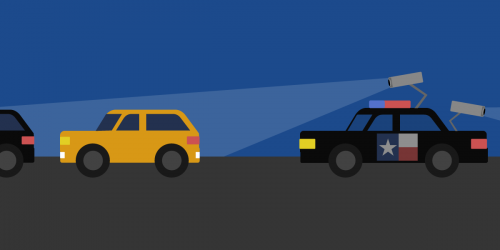
Sacramento—The Electronic Frontier Foundation (EFF) and Sen. Joel Anderson (R-Alpine) have introduced a California bill to protect drivers’ privacy by allowing them to cover their license plates while parked to avoid being photographed by automated license plate readers (ALPRs). The legislation will be considered by the California Senate...
Don't listen to the telecom lobby. Congress' vote to repeal the Federal Communications Commission's (FCC) broadband privacy rules has a profound impact on your online privacy rights. According to those who supported the repeal, the rules never took effect (they were scheduled to do so throughout 2017), so the...
All surveillance is political.Nowhere is this more evident than on the local level when law enforcement acquires new surveillance technology. Too often, the political process advantages police over the public interest. In California, a new bill—S.B. 21—offers the rare opportunity to shift the balance in favor of privacy. ...
This week EFF is in Geneva, at the Thirty-Fourth session of the Standing Committee on Copyright and Related Rights (SCCR) of the World Intellectual Property Organization (WIPO), to oppose a Broadcasting Treaty that could limit the use of video online. Ahead of this meeting, word was that delegations...
Overturning the Supreme Court decision on Alice v. CLS Bank would allow abstract patents to hurt innovation. Alice is working to rid the system of vague and overbroad abstract patents, and should remain the law.
Republicans in Congress recently voted to repeal the FCC’s broadband privacy rules. As a result, your Internet provider may be able to sell sensitive information like your browsing history or app usage to advertisers, insurance companies, and more, all without your consent. In response, Internet users have been asking what...
We sent a reporter to the RSA Conference in San Francisco, California in February to ask one simple question: What don’t you want the NSA to know about you?