Rhode Island legislators recently decided not to advance a bill that would have made that state’s bad “anti-hacking” law even worse. This is good news. But the struggle continues against other vague and overbroad computer crime laws. As EFF previously explained, this Rhode Island bill was a...
You spoke, and the California Legislature listened. We’re happy to report that A.B. 2880 was amended in the State Senate to remove the dangerous sections that EFF and over 25 other organizations opposed. Your messages to the Legislature were vital to this effort.
Update June 22, 2016: The Senate failed to pass an amendment to expand the FBI's National Security Letter powers and to make the "lone wolf" provision of the Patriot Act permanent; however, the amendment will probably be voted on again soon. Senate Majority Leader Mitch McConnell switched his vote...
It's Not Too Late to Write to Congress About the Disastrous Rule Change What happens when you try to push a dangerous policy through without the Internet noticing? The Internet fights back.
A few days ago, we warned of an impending rule change that...
Today at the OECDMinisterial Meeting on the Digital Economy in Mexico, the Global Commission on Internet Governance released its final report, One Internet. Despite its important-sounding name, the Commission is not an official body, but a think tank convened in 2014 by the Center for...
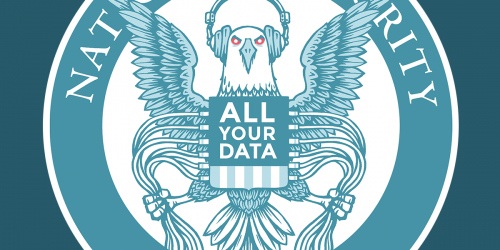
It’s time to lift the cloak of secrecy that has until now shielded the NSA from judicial scrutiny. EFF served the agency with information requests late last week in Jewel v. NSA, EFF’s signature case challenging government surveillance. Since we filed the case in 2008, leaks about government...
EFF celebrates the anniversary of the Supreme Court’s landmark decision in Alice v. CLS Bank. In Alice, the court ruled that an abstract idea does not become eligible for a patent simply by being implemented on a generic computer.
After hurdling procedural barriers, a congressional attempt to protect privacy and encryption failed on the House floor yesterday, falling short of a majority by a mere 24 votes.
Warrants are not difficult to secure when appropriate. They prevent the government from abusing its powers, as it repeatedly...
EFF Calls for a Day of Action on June 21. Please join us. The Department of Justice is using an obscure procedure to push through a rule change that will greatly increase law enforcement’s ability to hack into computers located around the world. It’s an update to Rule...
The Second Circuit has released its long-awaited opinion in Capitol Records v. Vimeo, fully vindicating Vimeo’s positions. EFF along with a coalition of advocacy groups, submitted a friend-of-the-court brief in the case, supporting Vimeo.
The Second Circuit considered three important issues. First, whether a service provider...
It is time for the agency to use its authority to protect consumer privacy. The Federal Communications Commission (FCC) is collecting comments from the public about how the laws that govern consumer privacy over broadband networks should be applied. In its response, EFF has called on the FCC to...
Last week, Santa Clara County—which encompasses much of Silicon Valley—set a new standard in local surveillance transparency after months of activism by residents and allies from across the Bay Area. Their efforts, and the policy it enabled, suggest an overlooked strategy in the national battle to curtail unaccountable secret...
EFF’s team of fearless lawyers defends your rights on the frontlines of technology and the law, from police stops on the street to arguments in the courtroom to the halls of government where policies are ground out. EFF’s latest hire, Criminal Defense Staff Attorney Stephanie Lacambra, is a fierce...