


Election Security Bill Without Paper Records and Risk Limiting Audits? No Way.
The Senate is working on a bill to secure election infrastructure against cybersecurity threats, but, unless amended, it will widely miss the mark. The current text of the Secure Elections Act1 omits the two most effective measures that could secure...

Behind the Octopus: The Hidden Race to Dismantle Global Law Enforcement Privacy Protections
Last month, 360 cyber crime experts from 95 countries gathered in Strasbourg to attend the Octopus Conference. The event sounds like something from James Bond, and when you look at the attendee list—which includes senior figures from the United States Department of Justice, national police forces across the...

California Should Provide Public Access to Police Body Cam Footage
These days, more police officers are using body-worn cameras, or BWCs. That's why it's more important than ever we have clear guidelines around the public's right to access those police recordings. To that end, EFF is supporting [PDF] A.B. 748, a bill currently pending in the California legislature that...

UN Report Sets Forth Strong Recommendations for Companies to Protect Free Expression
“YouTube keeps deleting evidence of Syrian chemical weapon attacks”“Azerbaijani faces terrorist propaganda charge in Georgia for anti-Armenian Facebook post”“Medium Just Took Down A Post It Says Doxed ICE Employees”These are just a sampling of recent headlines relating to the regulation of user-generated online content, an increasingly controversial subject that has...

Journalists and Digital Security: Some Thoughts on the NYT Leak Case
The leak investigation involving a Senate staffer and a New York Times reporter raises significant issues about journalists, digital security, and the ability of journalists to protect confidential sources.The New York Times recently revealed that the FBI had been investigating a former aide to the Senate Intelligence Committee, James...
A Tale of Two Poorly Designed Cross-Border Data Access Regimes
On Tuesday, the European Commission published two legislative proposals that could further cement an unfortunate trend towards privacy erosion in cross-border state investigations. Building on a foundation first established by the recently enacted U.S. CLOUD Act, these proposals compel tech companies and service providers to ignore critical privacy...

Dear Canada: Accessing Publicly Available Information on the Internet Is Not a Crime
Update: Canadian authorities announced on May 7 that they dropped all charges against the teen they had previously accused of unauthorized use of a computer service for downloading public records from a government website. Canadian authorities should drop charges against a 19-year-old Canadian accused of “unauthorized use of a...
The U.S. CLOUD Act and the EU: A Privacy Protection Race to the Bottom
U.S. President Donald Trump’s $1.3 trillion government spending bill, signed March 23rd, offered 2,323 pages of budgeting on issues ranging from domestic drug policy to defense. The last-minute rush to fund the U.S. government through this all-or-nothing “omnibus” presented legislators with a golden opportunity to insert policies that would escape...

State Dept. Wants to Expand Social Media Collection to All Visa Applicants
The State Department has alarmingly declared that it wants to collect social media information from all visa applicants. This appears to be an expansion of a 2017 program that sought social media information only from a subset of initially suspicious visa applicants. This is also the latest effort in a...
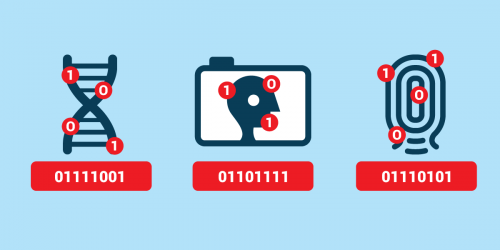
Customs and Border Protection's Biometric Data Snooping Goes Too Far
The U.S. Department of Homeland Security (DHS), Customs and Border Protection (CBP) Privacy Office, and Office of Field Operations recently invited privacy stakeholders—including EFF and the ACLU of Northern California—to participate in a briefing and update on how the CBP is implementing its Biometric Entry/Exit Program.
As we’ve written...

