



Terrorism Lawsuits Threaten Lawful Speech: 2018 in Review
One of the most important principles underpinning the Internet is that if you say something illegal, you should be held responsible for it—not the owners of the site or service where you said it. That principle has seen many threats this year—not just in federal legislation, but also in...

Congress Censors the Internet, But EFF Continues to Fight FOSTA: 2018 in Review
EFF fought FOSTA in 2018. We fought the bill in Congress and, when the president signed it into law, immediately set our sights on challenging it in court.The Allow States and Victims to Fight Online Sex Trafficking Act (FOSTA, H.R. 1865) was ostensibly passed to fight sex trafficking. The...
Europe Speeds Ahead on Open Access: 2018 in Review
Open access is the common-sense idea that scientific research (especially scientific research funded by the government or philanthropic foundations) should be available to the public—ideally with no legal or technical barriers to access and reuse. EFF is a longtime supporter of the open access movement: we think that promoting broad...
Grassroots Networks Mobilize From Coast-to-Coast to Promote Digital Rights: 2018 Year in Review
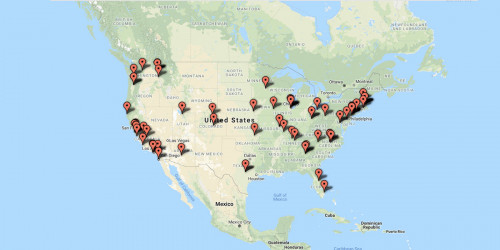
The digital rights movement showed its strength this year by projecting influence in jurisdictions across the United States. Community organizations on both coasts, as well as the Midwest and the South, took action, promoting issues from net neutrality and civilian oversight of local police surveillance to the right to repair...
Big Wins for Privacy and Free Speech: 2018 in Review
As 2018 draws to a close, we’ve gathered together some of EFF’s key legal wins this year. Some of these wins are only stops along the way to a larger goal, but each is hard fought, whether we’re serving as counsel or amicus curiae. Every one of these victories helped...

Closed, Proprietary, Felonious: The Toxic Rainbow of Locked Technology
When is software free? Is it enough that the software be licensed under a free or open license? What about patents? Software as a service? Trade secrets? What about DRM? Is software ever free?There's a saying in the software freedom movement: "if you can't open it, it's not yours." That...
Facebook’s Sexual Solicitation Policy is a Honeypot for Trolls
Facebook just quietly adopted a policy that could push thousands of innocent people off of the platform. The new “sexual solicitation” rules forbid pornography and other explicit sexual content (which was already functionally banned under a different statute), but they don’t stop there: they also ban “implicit sexual...

In the New Fight for Online Privacy and Security, Australia Falls: What Happens Next?
With indecent speed, and after the barest nod to debate, the Australian Parliament has now passed the Assistance and Access Act, unopposed and unamended. The bill is a cousin to the United Kingdom’s Investigatory Powers Act, passed in 2016. The two laws vary in their details, but both now...
Amendments to Mauritius' ICT Act Pose Risks for Freedom of Expression
Mauritius doesn’t get a whole lot of international attention. The island nation off the southeast coast of Africa, officially the Republic of Mauritius, is a diverse country that is highly ranked for democracy, and economic and political freedom. The Economist’s Intelligence Unit has named the country the only “full...

In a Letter To The EU, European Film Companies and Sports Leagues Disavow Article 13, Say It Will Make Big Tech Stronger
A coalition of some of Europe's largest film companies and sports leagues have published an open letter to the European Union officials negotiating the final stage of the new Copyright Directive; in their letter, the companies condemn "Article 13," the rule requiring all but the smallest online platforms...

