


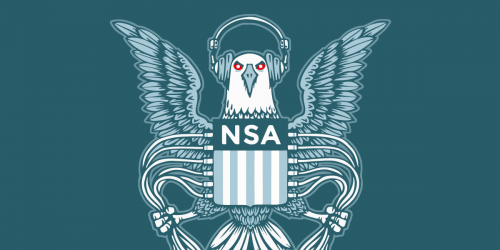
PCLOB “Book Report” Fails to Investigate or Tell the Public the Truth About Domestic Mass Surveillance
The Privacy and Civil Liberties Oversight Board (PCLOB) has concluded its six-year investigation into Executive Order 12333, one of the most sprawling and influential authorities that enables the U.S. government’s mass surveillance programs. The result is a bland, short summary of a classified report, as well as a justified,...

Setbacks in the FTC’s Antitrust Suit Against Facebook Show Why We Need the ACCESS Act
After a marathon markup last week, a number of bills targeting Big Tech’s size and power, including the critical ACCESS Act, were passed out of committee and now await a vote by the entire House of Representatives. This week, decisions by a federal court tossing out both the Federal...

Understanding Amazon Sidewalk
Just before the long weekend at the end of May, Amazon announced the release of their Sidewalk mesh network. There are many misconceptions about what it is and what it does, so this article will untangle some of the confusion.It Isn’t Internet SharingMuch of the press about Amazon Sidewalk...

The New ACCESS Act Is a Good Start. Here’s How to Make Sure It Delivers.
The GDPR, Privacy and Monopoly
In Privacy Without Monopoly: Data Protection and Interoperability, we took a thorough look at the privacy implications of various kinds of interoperability. We examined the potential privacy risks of interoperability mandates, such as those contemplated by 2020’s ACCESS Act (USA), the Digital Services Act and Digital Markets Act (EU),...

Ring Changed How Police Request Door Camera Footage: What it Means and Doesn’t Mean
Amazon Ring has announced that it will change the way police can request footage from millions of doorbell cameras in communities across the country. Rather than the current system, in which police can send automatic bulk email requests to individual Ring users in an area of interest up to...

Facebook's Policy Shift on Politicians Is a Welcome Step
We are happy to see the news that Facebook is putting an end to a policy that has long privileged the speech of politicians over that of ordinary users. The policy change, which was announced on Friday by The Verge, is something that EFF has been pushing for...

Organizing in the Public Interest: MusicBrainz

Supreme Court Overturns Overbroad Interpretation of CFAA, Protecting Security Researchers and Everyday Users
EFF has long fought to reform vague, dangerous computer crime laws like the CFAA. We're gratified that the Supreme Court today acknowledged that overbroad application of the CFAA risks turning nearly any user of the Internet into a criminal based on arbitrary terms of service. We remember the...
PayPal Shuts Down Long-Time Tor Supporter with No Recourse
Larry Brandt, a long-time supporter of internet freedom, used his nearly 20-year-old PayPal account to put his money where his mouth is. His primary use of the payment system was to fund servers to run Tor nodes, routing internet traffic in order to safeguard privacy and avoid country-level censorship....

