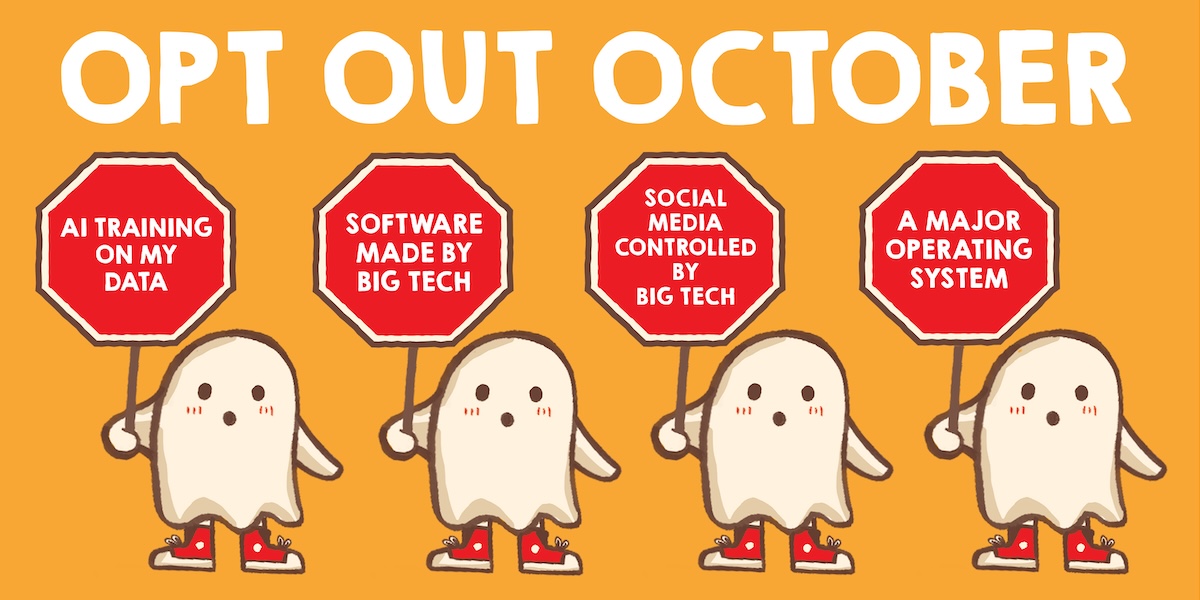
It might seem like there are simply no other choices for social media beyond those controlled by big tech companies, but that’s not true at all. In fact, we’re in a golden era of options being built to prevent this sort of consolidated power from ever happening again.
The rise of decentralized networks has transformed social media, and there’s more to come. Platforms like Mastodon and Bluesky (and yes, even Meta’s Threads) have shown a future we can actually look forward to.
Currently, social media is dominated by a handful of massive companies who wall off their services so you’re required to use their websites and apps. This gives them control over their behavioral ad networks and algorithms, giving you little to no control to address the most frustrating parts of the service.
Decentralized social networks in the “Open Social Web” seek to fix that. Participating sites can plug in to each other, something called interoperability. With just one account, you could reach anyone on another participating website. For example, imagine a world where you could follow your friend on Instagram from your TikTok account. Such decentralization tends to support portability, which means if the service you use goes under or just starts to suck, you can pack up and go elsewhere, taking your followers and follows with you. And because it’s not a single platform, there are a variety of moderation options to choose from so you can find a place where you feel safe to communicate.
With just one account, you could reach anyone on another participating website.
While Bluesky, Mastodon, and Threads are useful proofs of concept, the real magic trick of the open social web is the decentralized technology that powers them, which can be used to build many other social media.
For example, AT Protocol, the standard that Bluesky is built off of, has seen a wild variety of open alternatives to old social media platforms: Skylight (TikTok), Germ (encrypted DMs), Streamplace (Twitch), Flashes (Instagram), Surf (news), and plenty of others. AT Protocol projects tend to focus on the “firehose,” where everything is easy to find and search through.
Meanwhile, ActivityPub, the standard protocol Mastodon is based on, also has a ton of cool software, like: PeerTube (YouTube alternative), PixelFed (Instagram alternative), Bookwyrm (Goodreads), Loops (TikTok), and more. You can blog, read the news, and chat in forums. ActivityPub projects tend to focus more on community control and accountability.
These and other social media-like services can interoperate with each other. So, if you have a Bluesky account, you can follow someone on Mastodon, or even on Pixelfed, and vice versa. It rules.
Yes, these alternatives have fewer users, and you may have to convince some of your friends to come along for the ride, but the payoff is worth it. You’ll get an account you can truly control. Where you can easily pack up and move elsewhere if things go sideways, or where you can set your own moderation policies that best suit your needs, not a corporate bottom line.
Did you take a step to opt out of social media controlled by big tech? Here’s a merit badge to share on social media! Tell your friends what you’ve accomplished and help them opt out too.