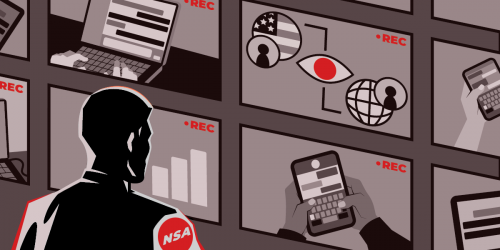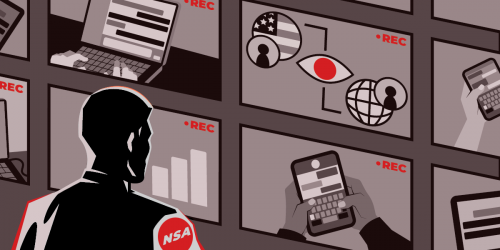

The Fourth Amendment prohibits unreasonable searches, which typically means that the government has to get a warrant if it wants to search your home or read your emails. But under Section 702, there’s a glaring loophole. In theory, this provision of the Foreign Intelligence Surveillance (FISA) Act is just that: aimed at collecting foreign intelligence, possessed by foreigners who the Supreme Court has said are outside the scope of the Fourth Amendment’s protections. But in reality, Section 702 sweeps in millions of Americans’ communications, including through “downstream” surveillance, or the intelligence agencies’ collection of communications directly from the companies that Internet users rely on to communicate, including Google, Facebook, and Yahoo.
A landmark case in 2025 sided with EFF and others that this practice is unconstitutional. The ruling came in a criminal case, United States v. Hasbajrami, after more than a decade of litigation, and over four years since the Second Circuit Court of Appeals found that backdoor searches constitute “separate Fourth Amendment events” and directed the district court to determine a warrant was required.
In the intervening years, Congress has reauthorized Section 702 multiple times, each time ignoring overwhelming evidence that the FBI and the intelligence community abuse their access to databases of warrantlessly collected messages and other data. The Foreign Intelligence Surveillance Court (FISC), which Congress assigned with the primary role of judicial oversight of Section 702, has also repeatedly dismissed arguments that the backdoor searches violate the Fourth Amendment, giving the intelligence community endless do-overs despite its repeated transgressions of even lax safeguards on these searches.
This decision sheds light on the government’s liberal use of what is essential a “finders keepers” rule regarding your communication data. As a legal authority, FISA Section 702 allows the intelligence community to collect a massive amount of communications data from overseas in the name of “national security.” But, in cases where one side of that conversation is a person on US soil, that data is still collected and retained in large databases searchable by federal law enforcement. Because the US-side of these communications is already collected and just sitting there, the government has claimed that law enforcement agencies do not need a warrant to sift through them. EFF argued for over a decade that this is unconstitutional, and now a federal court agrees with us.