

Rights That Are Being Forgotten: Google, the ECJ, and Free Expression
Google’s handling of a recent decision by the European Court of Justice (ECJ) that allows for Europeans to request that public information about them be deleted from search engine listings is causing frustration amongst privacy advocates. Google—which openly opposed interpreting Europe’s data protection laws as including the...

Net Neutrality and Transparency Principles Must Extend to Mobile Internet Access Too
Recent debate about network neutrality has largely focused on how to make sure broadband providers don’t manipulate their customers’ Internet connections (or as John Oliver put it, how to prevent “cable company f*ckery”). But in today’s world of smartphones and tablets people are spending less of their time...
Speakeasy: Berlin with EFF & FPF
Join EFF and the Freedom of the Press Foundation (FPF) staff for a drink on Sunday evening in Berlin! This joint event is hosted by EFF Staff Technologist Yan Zhu, EFF Web Developer Bill Budington, FPF SecureDrop Lead Developer Garrett Robinson, and FPF Technologist...

TPP Negotiations Go Further Underground with Unprecedented Secrecy Around Meetings in Canada
EFF is in Ottawa this week for the Trans-Pacific Partnership (TPP) negotiations, to influence the course of discussions over regressive digital policy provisions in this trade agreement that could lead to an increasingly restrictive Internet. But this round is different from the others—the secrecy around the talks is...

The Next Patent Office Director Probably Shouldn't Be One Of The Guys Who Killed Patent Reform
Philip Johnson is Chief Intellectual Property Counsel of Johnson & Johnson, one of the largest pharmaceutical companies in the world. He is also a representative member of the Coalition for 21st Century Patent Reform, the leading trade group opposing patent reform this past year.
And now he's rumored...

Myanmar's Facebook Block Could Signal More to Come
In early March, Yangon—the former capital of Myanmar (Burma)—played host to a conference held by the East-West Center, called "Challenges of a Free Press." The event (which I attended) featured speakers from around the world, but was more notable for its local speakers, including Aung San Suu Kyi and...

Dear NSA, Privacy is a Fundamental Right, Not Reasonable Suspicion
Learning about Linux is not a crime—but don’t tell the NSA that. A story published in German on Tagesschau, and followed up by an article in English on DasErste.de today, has revealed that the NSA is scrutinizing people who visit websites such as the Tor Project’s home page...
Is Europe Serious About Reforming Copyright, or Just Greasing the Squeaky Wheel?
Coordinated enforcement of intellectual property (IP) rights—copyright, patents and trade marks—has been an elusive goal for Europe. Back in 2005, the European Commission struggled to introduce a directive known as IPRED2 that would criminalize commercial-scale IP infringements, but abandoned the attempt in 2010 due to jurisdictional problems. IP...
Is Your Android Device Telling the World Where You've Been?
Is Your Android Device Telling the World Where You've Been?
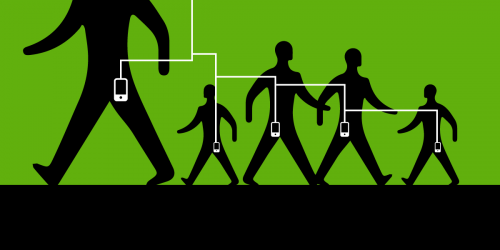
Do you own an Android device? Is it less than three years old? If so, then when your phone’s screen is off and it’s not connected to a Wi-Fi network, there's a high risk that it is broadcasting your location history to anyone within Wi-Fi range that wants to listen.
...

