


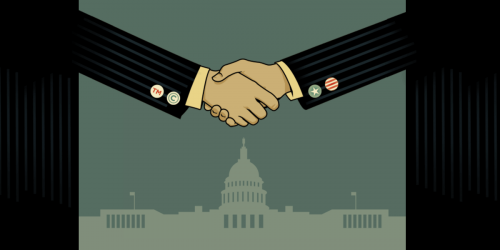
The Battle Against TPP Isn’t Over, But It Has Shifted
With President-elect Trump's victory last night, the last hopes of the Obama administration passing the Trans-Pacific Partnership (TPP) during the lame duck session of Congress have evaporated. The passage of the TPP through Congress was dependent upon support from members of the Republican majority, and there is no realistic prospect...

Delivering Privacy Badger and HTTPS Everywhere to Mobile Users at WARP Speed
As people spend more and more time using phones and tablets, privacy and security for mobile browsers has become an acute problem. That’s why we’re excited to see a new Android browser called WARP improving the state of the field. WARP was built by Qualcomm and EMbience, and includes...

Deep Dive: Open Access and Transforming the Future of Research
EFF works to inform the world about breaking issues in the world of technology policy and civil liberties. And one of our best ways of communicating with our friends and members is through our nearly-weekly newsletter, EFFector. Last week, we sent out a very special EFFector: a...

Fewer Resources, Fewer Choices: A School Administrator in Indiana Works to Protect Student Privacy

Support Whistleblowers at the Aaron Swartz Hackathon This Weekend
This weekend you have the chance to add to Aaron Swartz’s legacy by boosting tools for whistleblowers.
The 2016 Aaron Swartz International Hackathon—held in honor of the late Internet and political activist—will take place during the day Saturday and Sunday at the Internet Archive in San Francisco. The...

Researchers Matched Images on Tattoo Websites to a German Police Database
For the last year, EFF has been battling to free records from the National Institute of Standards and Technology (NIST) regarding an ethically dubious research program to promote the development of automated tattoo recognition technology. The agency is months delinquent in providing a variety of information, most notably the list...

Why the Government Must Disclose Its Exploit to the Defense in the Playpen Cases
In addition to difficult questions concerning the Fourth Amendment, Rule 41, and the limits of government hacking, the Playpen cases raise an important question about the future of digital rights: whether, to what extent, and under what circumstances the government must disclose to criminal defendants how the government carried...

Fewer Resources, Fewer Choices: A School Administrator in Indiana Works to Protect Student Privacy
In a rural, partly Amish community in Indiana, the schools are rapidly adopting educational technology from tech giants like Google. Students may be leaving farms in the morning to come to classrooms with Chromebooks at every desk. As technology becomes more and more integrated into modern education, these schools have...

Download EFF’s New, Improved Mobile App
We’re pleased to announce our slick new app, an updated version of EFF Alerts.
Download it today from the Android store.
Some of the key features:
Receive push notifications for vital advocacy campaigns when your voice is needed most.
Easily access all...

A Bit More Transparency in Patent Lawsuits
Should patent lawsuits filed in federal courts be hidden from the public? We don’t think so, especially where a patent owner may be suing multiple people based on the same claim. Apart from the general principle that legal processes should be open to the public whenever possible, as a practical...

