

What Reporters Should Look For in Latest Facebook Document Leak
NBC’s latest release of 7,000 pages of leaked internal Facebook documents has revealed how Facebook treated user data as leverage with external developers and spun anti-competitive moves as privacy improvements. As members of the press and civil society continue to inspect this massive volume of information in the...

EFF Urges Court to Reconsider Decision That Harms Internet Users’ Ability to Protect Themselves Online
Update 12/31/19: Unfortunately, the Ninth Circuit declined to rehear the case and endorsed its original holding. However, the three-judge panel issued a revised opinion that deleted problematic language in the original opinion that had stated, "[T]he criteria for blocking online material must be based on the characteristics of...
With a Raid on Javier Smaldone, Argentinian Authorities Have Restarted Their Harassment of E-Voting Critics
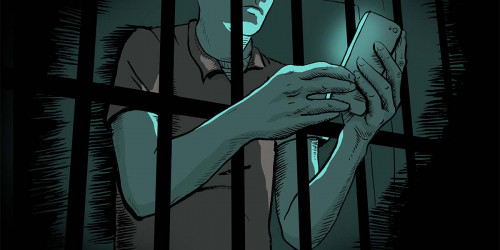
Javier Smaldone is a well-known figure in the Argentinian infosec community. As a security researcher, he’s worked to highlight the flaws in electronic voting in Argentina, despite the country’s local and federal attempts to move ahead with insecure software and electoral procedures.The Argentinian authorities have a reputation of...

Publishers Should be Making E-Book Licensing Better, Not Worse
Macmillan, one of the “Big Five” publishers, is imposing new limits on libraries’ access to ebooks—and libraries and their users are fighting back.Starting last week, the publisher is imposing a two-month embargo period on library ebooks. When Macmillan releases a new book, library systems will be...
FTC Takes Action Against Stalkerware Company Retina-X
The FTC recently took action against stalkerware developer Retina-X, the company behind apps MobileSpy, PhoneSheriff, and Teenspy. The FTC settlement bars Retina-X from distributing its mobile apps until it can adequately secure user information and ensure its apps will only be used for “legitimate purposes.” But here’s...

Join EFF for Aaron Swartz Day This Weekend at The Internet Archive
Join EFF and others on November 9 at the Internet Archive for Aaron Swartz Day—an annual event to celebrate Aaron Swartz’s legacy as an activist, programmer, entrepreneur, and political organizer. Aaron’s life was cut short in 2013, after he was charged under the notoriously draconian Computer Fraud and...

Virtual(ly) Private Network: NordVPN’s Breach and the Limitations of VPNs
Transparency Advocates and Environment Defenders Call on California Supreme Court to Review Government Email Deletion Practices
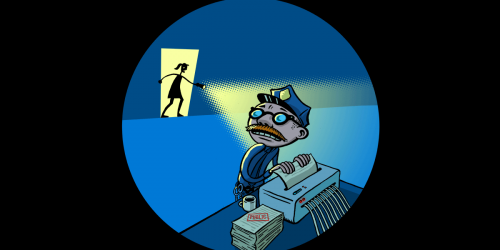
In California, as in many states, the public has a right to request public records—government documents that reveal information such as what decisions public officials make, what actions they take, and how they spend our money. But what happens when a government agency starts deleting records faster than a member...

Affordances: Science Fiction About Algorithmic Bias and Technological Resistance
Future Tense Fiction, a joint project of ASU’s Center for Science and the Imagination and Slate, has just published Affordances, a new science fiction story by EFF Special Advisor Cory Doctorow. It's a tale of algorithmic bias, facial recognition, and technological self-determination that touches on many of EFF’s...
Congress, Remember the 4th Amendment? It’s Time to Stop the U.S.-UK Agreement.
Unless Congress stops it, foreign police will soon be able to collect and search data on the servers of U.S. Internet companies. They’ll be able to do it without a probable cause warrant, or any oversight from a U.S. judge. This is all happening because of a new law enforcement...

