

Inequitable Access: An Anti-Competitive Scheme by Textbook Publishers
Update: An earlier version of this post described the UC Davis 'Equitable Access' program as it was implemented in Fall 2020. We have updated this post to clarify the changes made to the program in August 2021.It goes by many names, but no matter how you cut it, the new...
The Internet Archive Transforms Access to Books in a Digital World
In honor of Open Access Week, and particularly this year’s theme of structural equity, we wanted to highlight a project from the Internet Archive that is doing extraordinary work promoting access to knowledge. The bad news: that project is also under legal threat. The good news: the Archive,...
Europe's Digital Services Act: On a Collision Course With Human Rights
Last year, the EU introduced the Digital Services Act (DSA), an ambitious and thoughtful project to rein in the power of Big Tech and give European internet users more control over their digital lives. It was an exciting moment, as the world’s largest trading bloc seemed poised to end a...

A Universal Gigabit Future Depends on Open Access Fiber
Open Access Fiber Networks Will Bring Much-Needed High-Speed Internet Service and Competition to Communities More Efficiently and Economically: Report
San Francisco—Public investments in open access fiber networks, instead of more subsidies for broadband carriers, will bring high-speed internet on a more cost-efficient basis to millions of Americans and create an infrastructure that can handle internet growth for decades, according to a new report.Commissioned by EFF, “Wholesale Fiber is...

Resisting the Menace of Face Recognition
Face recognition technology is a special menace to privacy, racial justice, free expression, and information security. Our faces are unique identifiers, and most of us expose them everywhere we go. And unlike our passwords and identification numbers, we can’t get a new face. So, governments and businesses, often working in...
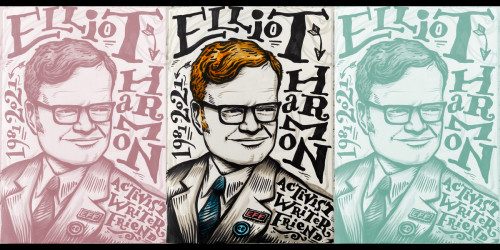
Honoring Elliot Harmon—EFF Activism Director, Poet, Friend—1981-2021

What About International Digital Competition?
John Gilmore Leaves the EFF Board, Becomes Board Member Emeritus
Since he helped found EFF 31 years ago, John Gilmore has provided leadership and guidance on many of the most important digital rights issues we advocate for today. But in recent years, we have not seen eye-to-eye on how to best communicate and work together, and we have been unable...

Police Can’t Demand You Reveal Your Phone Passcode and Then Tell a Jury You Refused
The Utah Supreme Court is the latest stop in EFF’s roving campaign to establish your Fifth Amendment right to refuse to provide your password to law enforcement. Yesterday, along with the ACLU, we filed an amicus brief in State v. Valdez, arguing that the constitutional privilege...

