
The EU Digital Markets Act’s Interoperability Rule Addresses An Important Need, But Raises Difficult Security Problems for Encrypted Messaging
The European Union’s Digital Markets Act (DMA) allows new messaging services to demand interoperability (the ability to exchange messages) from the internet's largest messaging services (like WhatsApp, Facebook Messenger, and iMessage). Interoperability is an important tool to promote competition and prevent monopolists from shutting down user-empowering innovation. But...
EFF Statement on the Declaration for the Future of the Internet
The White House announced today that sixty one countries have signed the Declaration for the Future of the Internet. The high-level vision and principles expressed in the Declaration—to have a single, global network that is truly open, fosters competition, respects privacy and inclusion, and protects human rights and fundamental...

SFPL Tech Week: Protecting Your Account

Canvas and other Online Learning Platforms Aren't Perfect—Just Ask Students
School digital environments are increasingly locked down, increasingly invasive, and increasingly used for disciplinary action. This has never been more troubling than during the pandemic, with schools adopting remote proctoring and surveillance tools at alarming rates and entering students’ homes via school-issued and personal devices. As students have tried to...
Amidst Invasion of Ukraine, Platforms Continue to Erase Critical War Crimes Documentation
When atrocities happen—in Mariupol, Gaza, Kabul, or Christchurch—users and social media companies face a difficult question: how do we handle online content that shows those atrocities? Can and should we differentiate between pro-violence content containing atrocities and documentation by journalists or human rights activists? In a conflict, should platforms take...

EFF to European Court: No Intermediary Liability for Social Media Users
Courts and legislatures around the globe are hotly debating to what degree online intermediaries—the chain of entities that facilitate or support speech on the internet—are liable for the content they help publish. One thing they should not be doing is holding social media users legally responsible for comments posted by...

What Low-Income People Will Lose with a Deadlocked FCC

DSA Agreement: No Filternet, But Human Rights Concerns Remain
Update: On 16 June, following the approval by the Council’s Permanent Representatives Committee, the EU Parliament’s Internal Market Committee overwhelmingly endorsed the deal on the EU’s Digital Services Act. EFF helped to ensure that the final language steered clear of intrusive filter obligations. The DSA is expected to...
Plaintiffs Press Appeals Court to Rule That FOSTA Violates the First Amendment
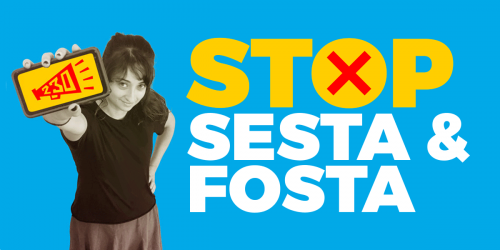
Two human rights organizations, a digital library, a sex worker activist, and a certified massage therapist on Monday appealed a ruling that denied their constitutional challenge to FOSTA (Allow States and Victims to Fight Online Sex Trafficking Act), an overbroad and censorious internet law that harms sex workers.The plaintiffs,...