
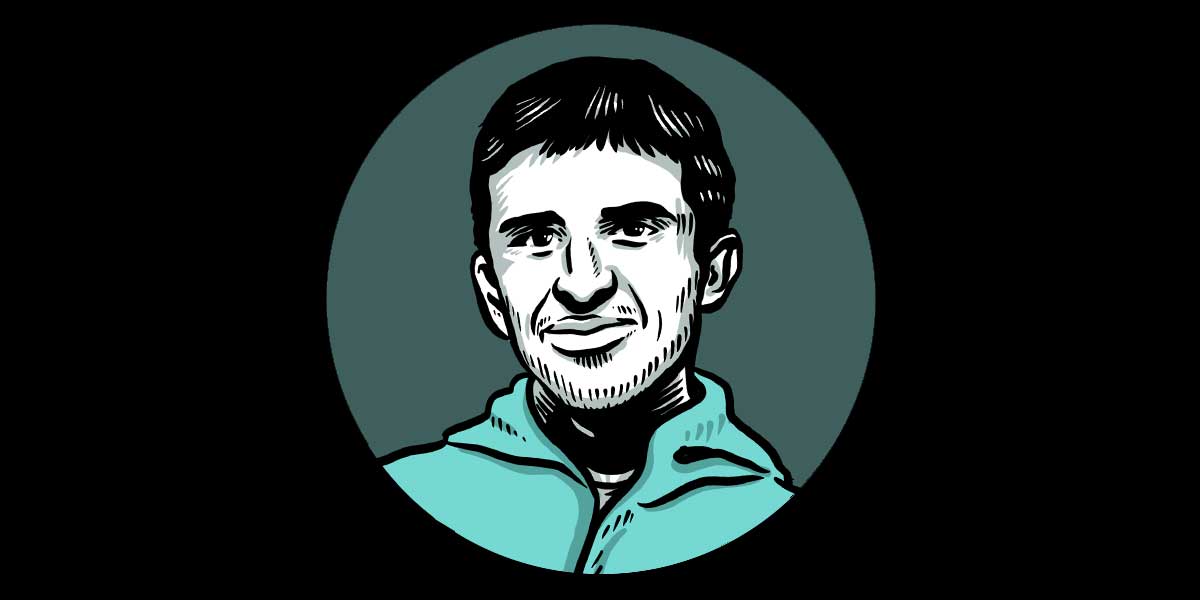
Doctor, Wikipedian and digital rights activist, Saudi Arabia
Arrested: July 2020, Riyadh
Currently serving a 14-year sentence
Osama Khalid is a prominent Wikipedian and digital rights activist in Saudi Arabia. A medical doctor by profession, he worked as a volunteer administrator for Arabic Wikipedia and published a blog where he advocated against censorship and in support of human rights and freedoms.
He is currently serving a fourteen-year sentence for undisclosed charges relating to his advocacy. Since his arrest in July 2020, Khalid has been kept in arbitrary detention in al-Ha’ir—a prison in Riyadh infamous for its abysmal conditions and reports of torture of inmates.
As early as his student years, Khalid pursued his commitment to making knowledge accessible online. Whilst studying medicine at King Saud bin Abdulaziz College of Health and Sciences in Riyadh, he created and managed a student-run online cloud platform for sharing medical knowledge. After graduating, he worked as a pediatrician.
"Information is power. And just like any power, there are those who seek to monopolize it for themselves."
- Osama Khalid
Alongside this work, Khalid was an active contributor to Arabic Wikipedia. Having made his first contribution in 2006, aged twelve, he later became a prolific author, translator and administrator on the site. The wide range of pages he contributed to included ones relating to critical human rights issues, like those of the women’s rights activists Loujain al-Hathloul (who is an EFF client) and Manal al-Sharif. He also started the page on al-Ha’ir prison in 2012. In 2013, he traveled to Hong Kong to attend a WikiProjectMedicine meeting.
Determined to advance internet access in Saudi Arabia, he voluntarily started a computer club in Riyadh to promote digital literacy in 2013 and was a prolific contributor to EFF’s HTTPS Everywhere campaign to ensure secure, encrypted access to webpages across the internet. He also provided Arabic subtitles to The Internet’s Own Boy, a documentary about the American computer programmer and digital activist Aaron Swartz.
Also in 2013, Khalid authored an article criticizing the Saudi government’s plans for the surveillance of encrypted digital communication platforms, concerned that this would lead to the censorship of free speech. This is just one example of his tireless work to advocate against censorship and in support of human rights and freedoms online, which he did through actively publishing on his blog and Twitter account—both of which have since been shut down.
In 2014, he attended the Fourth Arab Bloggers Meeting in Amman, Jordan, where participants from the MENA region worked to build networks of solidarity and activism with the support of Global Voices, EFF, and other NGOs.

In July 2020, he was arrested alongside his colleague Ziyad al-Sufyani (a podiatrist and fellow Wikipedian) during a wave of arbitrary arrests of activists across Saudi Arabia during the summer of the Covid-19 lockdown. During his initial questioning, Khalid was kept in solitary confinement and denied legal counsel.
International attention was not alerted to Khalid’s detention until mid-2022, when he was sentenced to five years’ imprisonment for undisclosed charges by Saudi Arabia’s secretive Specialised Criminal Court (SCC)—an exceptional jurisdiction established in 2008 to try cases of terrorism but used as a means of targeting critics of the Saudi authorities. Upon appeal, his sentence was increased to 32 years, then reduced to 25 years in 2023.
In 2024, EFF joined dozens of NGOs in calling for the immediate release of Osama Khalid and other Saudi Arabian activists in arbitrary detention.
In March 2025, Ziyad al-Sufyani was freed from his eight-year sentence during a wave of unexplained prisoner releases. Khalid remained in prison and, in September 2025, his sentence was reduced again to 14 years. The huge discrepancy between his changing sentences is indicative of the arbitrary manner of sentencing within the Saudi judicial system.
After his fourteen-year sentence was upheld in 2026, EFF joined a group of NGOs in once again calling for the immediate release of Osama Khalid. Khalid is not due to be released until 2034, by which time he will be 40 years old.
This profile was written with contributions from students at the University of York's Centre for Applied Human Rights.
