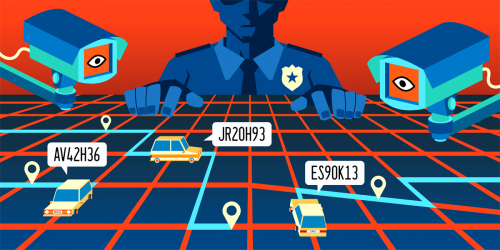
This post was co-written by Andi Cao, an EFF legal intern.Automated license plate readers (ALPRs) are mass surveillance. They photograph every passing car and log where and when it was captured, building a searchable record of where nearly everyone drives. Cities should not buy them, and cities that...
Whether you want to protect yourself from data brokers or just don’t want Big Tech profiting off your browsing data, Privacy Badger is here to help. More than 4 million people already use EFF’s free tracker-blocking extension to take a stand against online surveillance. Safari users can now join them...
SAN FRANCISCO—Privacy Badger, the award-winning tracker blocker made by the member-supported digital rights nonprofit Electronic Frontier Foundation (EFF), is now available for Safari on macOS.
Barry Steinhardt, a lifelong privacy champion and an early leader in the battle for digital civil liberties who served as EFF’s president in 1998-99, died last week at age 73. A Connecticut native, Steinhardt led the Vermont and Pennsylvania affiliates of the American Civil Liberties Union before becoming associate director...
No one should have to choose between speaking freely and protecting their immigration status. Yet that’s precisely the choice the Trump administration’s mass surveillance of online speech forces on noncitizens living in the U.S. Last fall, we sued on behalf of three major labor unions to stop this surveillance...
EFF joined the ACLU of Wisconsin in filing a petition to the Wisconsin Supreme Court, asking it to rule that the state’s constitution requires a warrant for retrospective searches of ALPR databases used by law enforcement in four cities.
EFF legal intern Gabrielle Ladun was the principal author of this post. The Department of Homeland Security Office of Inspector General (DHS OIG) has published a summary of findings from its audit of the Transportation Security Administration’s (TSA) facial recognition technology. While the detailed findings are classified, the summary...
No one should have to think twice before criticizing the government online. But a mass surveillance program known as "Catch and Revoke" was created to make millions do just that. EFF and other defenders of free speech are fighting back. In our latest EFFector newsletter, we're talking about a...
In an extremely disappointing ruling, a California trial court dismissed SIREN v. San Jose, our case challenging the city of San Jose’s warrantless searches of its vast stores of automated license plate reader (ALPR) data. EFF and the ACLU of Northern California represent SIREN and CAIR California, two...
Three decades ago, the U.S government treated encryption like a weapon, and it took some unlikely heroes to set it free: a grad student, a junior lawyer, and a fledgling digital rights group who sued the federal government.
In the past two years, the federal government has unlawfully consolidated data exposing our private information. This consolidation has been chaotic but generally came in three rolling waves: It started with DOGE, moved to agency-to-agency data sharing with ICE, and then attempted data-driven purges of state voter rolls.We all...
EFF strongly condemns Turkey’s state-led discriminatory, oppressive attacks on feminist and LGBTQ+ organisations, media platforms, student groups, and rights defenders and activists within the country. Since mid-September, access to the websites and social media accounts of a dozen organizations have been blocked by court order, while over 60...