Our Work

Our Work

No One Owns Invisible Disabilities

The purpose of registered trademarks is to protect people. When you buy a bottle of Club-Mate, the trademark affords you some certainty that what you’re buying is the product you already know and love and not that of a sneaky impostor. But when the U.S. Patent and Trademark Office...

Basic Digital Privacy and Security Workshop

Join Lisa Wright and William Theaker of the Electronic Frontier Foundation as they facilitate a hands-on workshop covering:
* Secure passwords + a password manager
* Keeping a working environment free of spyware and malware
* Online tracking, HTTPS + helpful browser configuration & extensions
Participants...

Google’s Allo Sends The Wrong Message About Encryption

When Google announced its new Allo messaging app, we were initially pleased to see the company responding to long-standing consumer demand for user-friendly, secure messaging. Unfortunately, it now seems that Google's response may cause more harm than good. While Allo does expose more users to end-to-end encrypted messaging, this potential...

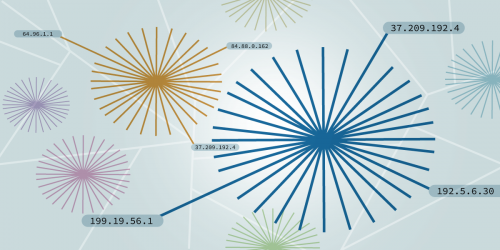
graphical representation of internet networks with numbers

Oversight Transition Isn't Giving Away the Internet, But Won't Fix ICANN's Problems

At midnight last Saturday morning, Washington DC time, oversight over the performance of ICANN's IANA functions—notably its maintenance of the root zone database of the Internet's domain name system (DNS)—passed from the National Telecommunications and Information Administration (NTIA) to ICANN's global multi-stakeholder community.
Despite several weeks of heated...

Cyber Security Project Events Series

A Talk with Electronic Frontier Foundation Executive Director, Cindy Cohn on Illegal Mass Surveillance & How We Can Stop It
Seminar
Series: Cyber Security Project Events Series
Open to the Public - 1 Brattle Square, 4th Floor, Suite 470
October 5, 2016
12:15-1:45 p.m. -...

Shadow Regulation: the Back-Room Threat to Digital Rights

When a new law threatens to stifle online speech, to limit our use of the Internet, or allow others to control our digital devices, we can push back in a variety of ways—participating in formal consultations, calling or petitioning our representatives, exposing the proposal through the media, and bringing a...

Pages

Back to top

JavaScript license information