



Australia: You Wouldn't Steal a DVD, But You Would Block Websites and Suspend Internet Accounts
When the Australian government first began requiring Internet Service Providers (ISPs) to block websites in 2012, Australians were assured that it would only be used to block the "worst of the worst" child pornography. This week, a discussion paper was issued that proposes to extend this...
NSA Surveillance Chilling Effects: HRW and ACLU Gather More Evidence
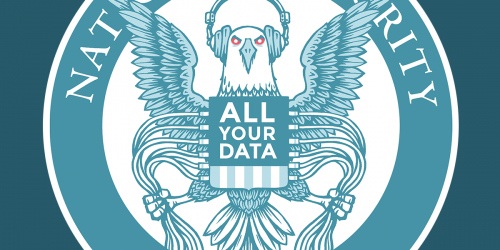
Human Rights Watch and the ACLU today published a terrific report documenting the chilling effect on journalists and lawyers from the NSA's surveillance programs entitled: "With Liberty to Monitor All: How Large-Scale US Surveillance is Harming Journalism, Law and American Democracy." The report, which is chock full of evidence...

Net Neutrality and the Global Digital Divide
EFF's position on net neutrality simply calls for all data that travels over the Internet to be treated equally. This means that we oppose ISPs blocking content based on its source or destination, or discriminating against certain applications (such as BitTorrent), or imposing special access fees that would make...
White House Website Includes Unique Non-Cookie Tracker, Conflicts With Privacy Policy
Yesterday, ProPublica reported on new research by a team at KU Leuven and Princeton on canvas fingerprinting. One of the most intrusive users of the technology is a company called AddThis, who are employing it in “shadowing visitors to thousands of top websites, from WhiteHouse.gov to YouPorn.com.”...
Former State Department Executive Calls Executive Order 12333 a “Legal Loophole” for Spying on Americans
“What kind of data is the NSA collecting on millions, or hundreds of millions, of Americans?"
That’s the question John Napier Tye, a former State Department section chief for Internet freedom, calls on the government to answer in his powerful op-ed published today by the Washington Post....

Rights That Are Being Forgotten: Google, the ECJ, and Free Expression
Google’s handling of a recent decision by the European Court of Justice (ECJ) that allows for Europeans to request that public information about them be deleted from search engine listings is causing frustration amongst privacy advocates. Google—which openly opposed interpreting Europe’s data protection laws as including the...
Myanmar's Facebook Block Could Signal More to Come
In early March, Yangon—the former capital of Myanmar (Burma)—played host to a conference held by the East-West Center, called "Challenges of a Free Press." The event (which I attended) featured speakers from around the world, but was more notable for its local speakers, including Aung San Suu Kyi and...
Is Europe Serious About Reforming Copyright, or Just Greasing the Squeaky Wheel?
Coordinated enforcement of intellectual property (IP) rights—copyright, patents and trade marks—has been an elusive goal for Europe. Back in 2005, the European Commission struggled to introduce a directive known as IPRED2 that would criminalize commercial-scale IP infringements, but abandoned the attempt in 2010 due to jurisdictional problems. IP...

UN Human Rights Council Reaffirms Promotion and Protection of Human Rights Online
EFF is pleased by the adoption of a resolution by the United Nations Human Rights Council (UNHRC) reaffirming the “promotion, protection and enjoyment of human rights on the Internet.” The resolution — sponsored by Brazil, Tunisia, Nigeria, Turkey, Sweden, and the United States—was adopted by consensus at the twenty-sixth...

What Does Copyright Have to Do With "Free Trade"? Unpicking the Undemocratic Transatlantic Trade and Investment Partnership
Democracy makes the job of our trade negotiators much harder. The light of democratic oversight makes it difficult for them to pander to the incessant demands of industry lobbyists, while ignoring the broader public interest. And the transparency that is central to democratic systems of governments impedes their efforts to...

