



Appeals Court’s Disturbing Ruling Jeopardizes Protections for Anonymous Speakers
A federal appeals court has issued an alarming ruling that significantly erodes the Constitution’s protections for anonymous speakers—and simultaneously hands law enforcement a near unlimited power to unmask them.
The Ninth Circuit’s decision in U.S. v. Glassdoor, Inc. is a significant setback for the First Amendment. The ability...

Who Has Your Back in Colombia? Karisma's Third-Annual Report Shows Progress
Fundación Karisma in cooperation with EFF has released its third-annual ¿Dónde Estan Mis Datos? report, the Colombian version of EFF’s Who Has Your Back. And this year’s report has some good news. According to the Colombian Ministry of Information and Communication Technologies, broadband Internet penetration in Colombia is well over...
20 Years of Protecting Intermediaries: Legacy of 'Zeran' Remains a Critical Protection for Freedom of Expression Online
This article first appeared on Nov. 10 on Law.com.At the Electronic Frontier Foundation (EFF), we are proud to be ardent defenders of §230. Even before §230 was enacted in 1996, we recognized that all speech on the Internet relies upon intermediaries, like ISPs, web hosts, search engines, and social...

EFF’s Street-Level Surveillance Project Dissects Police Technology
Despite A Victory on IP, the TPP's Resurgence Hasn't Cured Its Ills
Update: The official Ministerial statement on the new Comprehensive and Progressive Agreement for Trans-Pacific Partnership (CPTPP), including the schedule of suspended provisions, was released on November 11.
Ever since the United States withdrew from the Trans-Pacific Partnership (TPP) back in January, the remaining eleven countries have...

Another Court Overreaches With Site-Blocking Order Targeting Sci-Hub
Nearly six years ago, Internet user communities rose up and said no to the disastrous SOPA copyright bill. This bill proposed creating a new, quick court order process to compel various Internet services—free speech’s weak links—to help make websites disappear. Today, despite the failure of SOPA, a federal...
House Judiciary Committee Forced Into Difficult Compromise On Surveillance Reform
The House Judiciary Committee on Wednesday approved the USA Liberty Act, a surveillance reform package introduced last month by House Judiciary Committee Chairman Bob Goodlatte (R-VA) and Ranking Member John Conyers (D-MI). The bill is seen by many as the best option for reauthorizing and reforming Section 702 of the...
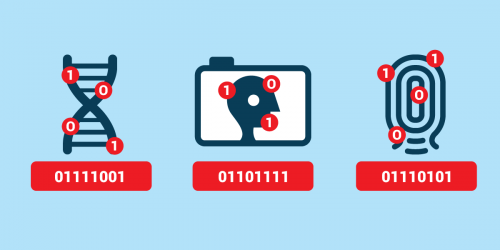
TSA Plans to Use Face Recognition to Track Americans Through Airports
The “PreCheck” program is billed as a convenient service to allow U.S. travelers to “speed through security” at airports. However, the latest proposal released by the Transportation Security Administration (TSA) reveals the Department of Homeland Security’s greater underlying plan to collect face images and iris scans on a...

SESTA Approved by Senate Commerce Committee—Still an Awful Bill
The Senate Commerce Committee just approved a slightly modified version of SESTA, the Stop Enabling Sex Traffickers Act (S. 1693).
SESTA was and continues to be a deeply flawed bill. It would weaken 47 U.S.C. § 230, (commonly known as “CDA 230” or simply “Section...
Here's How Congress Should Respond to the Equifax Breach
There is very little doubt that Equifax’s negligent security practices were a major contributing factor in the massive breach of 145.5-million Americans’ most sensitive information. In the wake of the breach, EFF has spent a lot of time thinking through how to ensure that such a catastrophic breach doesn’t happen...

