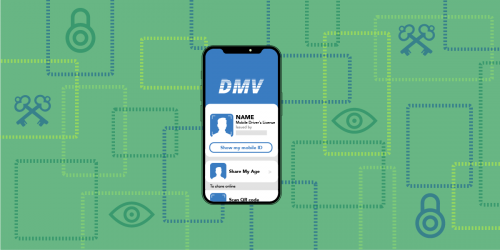

Digital ID encompasses various aspects of a person’s identity that are presented and verified through the internet or in person, such as a mobile driver's license stored in a Google or Apple Wallet.
There is currently an aggressive push from policymakers across the U.S. and around the world for more digital ID measures on the belief that these will lead to streamlined identity verification, faster access to government services, and increased inclusiveness.
However, digital ID systems raise serious concerns about privacy and equity. They don’t simply verify who you are—they redefine who can access services and what those services look like. They become gatekeepers to essential societal infrastructure, enabling governments and state agencies to close doors as easily as they open them. And they disproportionately harm those already at society’s margins, including people seeking asylum and undocumented communities, who already face heightened surveillance and risk.
Specifications for digital identification often recommend data minimization and privacy protections, but these recommendations are rarely mandatory and even the strongest recommended safeguards cannot resolve the core problem: a mandatory digital ID scheme shifts power dramatically away from individuals and privacy and toward the state and surveillance.
As such, EFF fights to ensure that your rights online and offline are protected amid the wave of developments around digital ID. We question if digital ID schemes even need to be built in many cases that they are presented as a solution, such as increased accessibility to government services. We analyze and review the technology behind digital IDs. And we implore governments who are expediting digital IDs to do the same instead of creating a strong tide for digital IDs where it may not be needed.
 Protect digital privacy and free expression. EFF's public interest legal work, activism, and software development preserve fundamental rights.