Privacy’s Defender: My Thirty-Year Fight Against Digital Surveillance

Our Work

Our Work

Schwarzenegger v. EMA

EFF and The Progress & Freedom Foundation (PFF) have urged the United States Supreme Court to protect the free speech rights of videogame creators and users asking the justices to uphold a ruling throwing out unconstitutional restrictions on violent videogames.
At issue is a California law that bans the...

SHARK v. PRCA

EFF asked a federal court to protect the free speech rights of an animal welfare group after its video critiques of animal treatment at rodeos were removed from YouTube due to sham copyright claims.
The group Showing Animals Respect and Kindness (SHARK) is a non-profit organization that videotapes and...

Shubert v Obama

Shubert v. Obama is a class action on behalf of all Americans against the government, alleging a massive, indiscriminate, illegal National Security Agency (NSA) dragnet of the phone calls and email of tens of millions of ordinary Americans. Filed in 2006, Shubert is now the longest running case against the...

Sony BMG Litigation Info

EFF held Sony BMG accountable for infecting its customers' computers with software that created grave security vulnerabilities and let the company spy on listening behavior. Sony BMG included the dangerous software on millions of music CDs as part of a misguided attempt to restrict consumer usage. After pushing Sony BMG...
Privacy issue banner, a colorful graphical representation of a padlock

Sorrell v. IMS Health

EFF have asked the U.S. Supreme Court to focus on the privacy issues at stake in a battle over the sale and data mining of medical records urging justices to reverse a ruling that could jeopardize patient privacy.
At issue is Vermont's Prescription Confidentially Law which bans pharmacies from...

Spocko and ABC/KSFO

EFF warned ABC not to pursue its bogus copyright infringement claims against 'Spocko' -- a blogger who sparked nationwide debate over a San Francisco radio station -- and asked the media giant to retract its baseless threats.
The free speech battle began when Spocko posted audio clips of what...

Steve Jackson Games

Steve Jackson Games v. Secret Service Case Archive

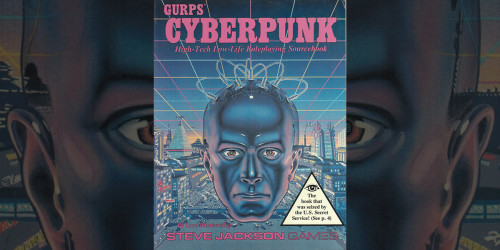
EFF set one of the first precedents protecting computer communications from unwarranted government invasion. In 1990, the Secret Service seized the computers of a small company out of Austin, Texas, called Steve Jackson Games. The computers included the company's electronic bulletin board system, a precursor the Internet for exchanging private...
Free Speech banner, an colorful graphic representation of a megaphone

Stone v. Paddock Publications

In March 2010, EFF filed an amicus brief urging the Illinois Court of Appeals to protect the identity of an anonymous critic who upset a local politician. Our brief set forth the appropriate First Amendment standard that should be applied to protect the online critic’s identity from curious or vituperative...

StorageTek v. Custom Hardware

The DMCA has increasingly been used to stymie competition rather than fight "piracy." This case is another example of that trend.
Here are the facts: a vendor of high-density storage solutions wants to dominate the aftermarket for maintenance and service of its products. Nothing new here - vendors would...

Betamax

The Supreme Court's ruling in Sony v. Universal Studios (aka the Betamax case) is a landmark copyright precedent that has sheltered a wide array of technology innovators from lawsuits at the hands of the entertainment industries. In 1984 the Court held that a company -- in this instance a VCR...

Free Speech banner, an colorful graphic representation of a megaphone

Tiffany v. eBay

EFF along with Public Citizen and Public Knowledge are urging a U.S. court of appeals to reject jewelry-maker Tiffany's attempt to rewrite trademark law and create new barriers for online commerce and communication.
Tiffany sued the online marketplace eBay claiming that eBay should be held liable for trademark infringement...

Creativity and Innovation issue banner, a colorful graphical representation of a light bulb

US v. Lowson

EFF and a coalition of academics and public policy groups are urging a federal judge to dismiss a criminal indictment that could give websites extraordinary power to dictate what behavior becomes a computer crime.
The four defendants in this case are the operators of Wiseguys Tickets Inc. a ticket-reselling...

UMG v. Augusto

The "first sale" doctrine expresses one of the most important limitations on the reach of copyright law. The idea, set out in Section 109 of the Copyright Act, is simple: once you've acquired a lawfully-made CD or book or DVD, you can lend, sell, or give it away without having...

Creativity and Innovation issue banner, a colorful graphical representation of a light bulb

UMG v. Veoh

Like many other companies that host content on behalf of users, video-hosting service Veoh has been bedeviled by copyright lawsuits. The copyright owners make the same argument in each of these suits: the hosting service should be liable for every infringing bit uploaded by naughty users and responsible for the...

US v. Jones

In January 2012, the U.S. Supreme Court unanimously confirmed that Americans have constitutional protections against GPS surveillance by law enforcement, holding that GPS tracking is a "search" under the Fourth Amendment.
In United States v. Jones (at times known as United States v. Maynard), FBI agents planted a GPS...

Pages

Back to top

JavaScript license information