



West Coast Jurisdictions Advance Community Oversight of Police Surveillance
This summer, two of the west coast’s largest metropolitan areas—Seattle and Los Angeles County—took major steps to curtail secret, unilateral surveillance by local police. These victories for transparency and community control lend momentum toward sweeping reforms pending across California, as well as congressional efforts to curtail unchecked surveillance by federal...
E-commerce RCEP Chapter: Have Big Tech’s Demands Fizzled?
Post-Mortem of Asia-Pacific regional IGF Panel Discussing Trade Rules
Over the past month, trade officials of the ASEAN group of countries and its six biggest trading partners have been frantically working to finalize the Regional Comprehensive Economic Partnership (RCEP). Expected to be ratified later this year, the RCEP is...

Deciphering China’s VPN Ban
This weekend Apple took a dispiriting step in the policing of its Chinese mainland App store: the company removed several Virtual Private Network (VPN) applications that allowed users to circumvent the China’s extensive internet censorship apparatus. In effect, the company has once again aided the Chinese government in...
How Threats Against Domain Names Are Used to Censor Content
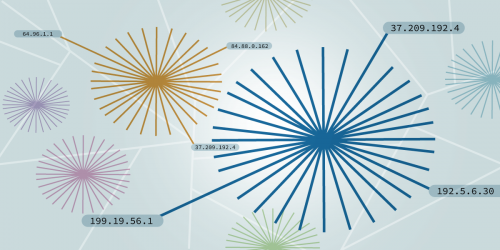
Today EFF and Public Knowledge are releasing a whitepaper titled Which Internet registries offer the best protection for domain owners? Top-level domains are the letters after the dot, like .com, .uk, .biz, or .mobi. Since 2003, hundreds of new top-level domains have come onto the market, and there...
RCEP Discussions on Ecommerce: Gathering Steam in Hyderabad
Sixteen countries from Asia-Pacific are meeting in Hyderabad for the 19th round of the Regional Comprehensive Economic Partnership (RCEP) which takes place in India from 18-28 July, 2017. EFF is participating to advocate for improved transparency and openness in the negotiations, and to express our concerns about possible new rules...

Tell Congress: We Want Trade Transparency Reform Now!
The failed Trans-Pacific Partnership (TPP) was a lesson in what happens when trade agreements are negotiated in secret. Powerful corporations can lobby for dangerous, restrictive measures, and the public can't effectively bring balance to the process. Now, some members of Congress are seeking to make sure that future trade...

Librarians Call on W3C to Rethink its Support for DRM
The International Federation of Library Associations and Institutions (IFLA) has called on the World Wide Web Consortium (W3C) to reconsider its decision to incorporate digital locks into official HTML standards. Last week, W3C announced its decision to publish Encrypted Media Extensions (EME)—a standard for applying locks to web video—in...

Do Last Week's European Copyright Votes Show Publishers Have Captured European Politics?
Three European Parliament Committees met during the week of July 10, to give their input on the European Commission's proposal for a new Directive on copyright in the Digital Single Market. We previewed those meetings last week, expressing our hope that they would not adopt the Commission's harmful proposals....

EFF to Minnesota Supreme Court: Sheriff Must Release Emails Documenting Biometric Technology Use
A Minnesota sheriff’s office must release emails showing how it uses biometric technology so that the community can understand how invasive it is, EFF argued in a brief filed in the Minnesota Supreme Court on Friday.
The case, Webster v. Hennepin County, concerns a particularly egregious failure to respond...
Australian PM Calls for End-to-End Encryption Ban, Says the Laws of Mathematics Don't Apply Down Under
"The laws of mathematics are very commendable but the only law that applies in Australia is the law of Australia", said Australian Prime Minister Malcolm Turnbull today. He has been rightly mocked for this nonsense claim, that foreshadows moves to require online messaging providers to provide law enforcement with...

