
EFF Goes to Dragon Con
The Electronic Frontier Foundation will attend Dragon Con, the 28-year-old science fiction and fantasy convention in downtown Atlanta, Georgia over Labor Day Weekend.
EFF will have table at the Hilton hotel (tentatively Table #7) and EFF Deputy General Counsel Kurt Opsahl and Media Relations Coordinator and Investigative Research...

Comcast Data Breach Leaks Thousands of Unlisted Phone Numbers, Threatening Customers' Privacy
The longer my information is out there, the worse the issue gets, yet still no action. I have paid for unpublishing my information for years as I testified in a murder trial. Now, my wife, children, and I are [a]ll in danger; and I have nowhere to turn.
Four...
Coding with EFF
Turning the Tide Against Online Spying

Online surveillance legislation put on hold after mass opposition
OpenMedia.ca; CIPPIC
Canada
(Published December 2012) Since the late 1990s, Canada has seen numerous proposals for so-called “lawful access” legislation seeking to grant police more power to intercept digital communications and access subscriber information without a warrant. Initially, the government’s latest bid for these new powers was included in an omnibus crime bill containing a host of troubling provisions. This legislative package was tabled in the fall of 2011, but no sooner did opponents of invasive online surveillance practices breathe a sigh of relief than Canada’s Bill C-30 emerged.
Introduced on Valentines Day of 2012, the standalone online spying legislation would have forced Internet service providers (ISPs) to hand over customer registration details to law enforcement without a warrant. “Bill C-30 was the Canadian government's latest attempt to update its online surveillance capacity by leveraging the communications infrastructure (ISPs, mobile phones, online service providers such as Google, Twitter and Facebook) against its citizens,” explains Tamir Israel of the Canadian Internet Policy and Public Interest Clinic (CIPPIC).
Yet when a wave of public outrage arose against Bill C-30, its proponents found themselves on the defensive – and the bill was sent back to committee, where it remained dormant for months afterward. While this outcome marked a battle victory for anti-surveillance activists, opponents of C-30 remained concerned as of the end of 2012 that it would resurface.
Opposition to Bill C-30 was driven by a broad-ranging coalition of NGOs, academics and other concerned parties including EFF. The Stop Online Spying campaign website was powered by OpenMedia.ca, while the Canadian Internet and Public Policy Clinic (CIPPIC) used its legal expertise to analyze the bill and find holes in the government’s argument. The two organizations worked collaboratively to build a coalition and mount opposition.
One successful campaign element was the use of Twitter to spread the word in a fun way. Users were encouraged to Tweet mundane details of their lives to Public Safety Minister Vic Toews, an architect of Bill C-30, to demonstrate their opposition. Unified under the hashtag #TellVicEverything, opponents buried Toews’ Twitter account with an avalanche of Tweets containing such revelations as: "I used soy milk in my cereal today. Still on the fence about it." At one point, the phrase #TellVicEverything was trending globally on Twitter, the mark of penetrating public consciousness in the digital age.
“It helped Canadians understand how excessive this bill was,” explained Communications Manager Lindsey Pinto. “It got more people involved and engaged, and that created a feedback loop—which made it difficult for the media to ignore it.”
Another creative component of the Stop Online Spying campaign was a series of broadcast-quality videos produced by volunteers, which were posted online and aired on television. “You should allow people to say, ‘I have a skill and I want to use it,’” Pinto advises. “People are smart—let them help.”
The proposed legislation has also attracted widespread condemnation from privacy experts, Privacy Commissioners (including specific concerns from the Federal and Ontario Commissioners, as well as general concerns on behalf of all Canadian privacy officers collectively), telecommunications companies and major Canadian newspapers.
Strategies around both timing and messaging helped the success of the effort to halt Bill C-30. First, opponents began campaigning even before the bill was introduced. “We made sure we did so early -- after we knew the initiative was coming, but before the government was ready to push forward with it in a serious way,” notes Israel. “For example, we hosted a roundtable amongst interested parties with representatives from a broad range of groups and individuals…within a month or so of the legislation's revival in early 2011. Having our coalition in place and operating early/preemptively was critical, in my mind.”
By the time Bill C-30 officially came under consideration, around 40,000 people had already signed the Stop Online Spying petition. That number eventually rose to around 147,000 signatures.
As for messaging, CIPPIC and others had to find ways of countering the government’s talking points. For example, the government asserted that nothing privacy-invasive was afoot, and tried to describe online data as being similar to information that could be found in a phonebook. Yet C-30 opponents used the analogy of footprints, which could be used to track one’s every step, to debunk the claim.
The coalition also showed that the need for this legislation had yet to be demonstrated, resulting in over-broad powers that had little to do with the actual problems law enforcement claimed it was trying to solve in the technical realm. Finally, the legislation was presented in Parliament as 'child pornography' legislation. The coalition debunked this myth by explaining in detail how the bill had little, if anything, to do with child exploitation.
“This ability to provide the full range of messaging (and to do it early) in a coordinated manner was critical,” notes Israel. “It ensured all of our messaging was substantively on point, while raising general awareness, providing the press with enough information to understand the true nature of the legislation. When the government announced that 'this legislation is about child pornography,' for example, the media could directly access sources explaining very clearly and directly, with references to the legislation, how this was not the case.”
- Innovative social media campaigns can fuel public interest.
- Whenever possible, build opposition before bad legislation is introduced.
- “People are smart. Let them help.” (Lindsey Pinto, OpenMedia.ca)
- OpenMedia.ca
- Canadian Internet Policy and Public Interest Clinic
- Privacy Expert Michael Geist
- Guest Blog: CIPPIC tech lawyer Tamir Israel debunks government myths on online spying
- “Ever Vigilant” Report by Ontario Privacy Commissioner Ann Cavoukian
- Ontario Privacy Commissioner Letter Writing Tool
- Stop Online Spying Petition
- Letter to Public Safety Canada from Canada’s Privacy Commissioners



Coding with EFF
We at EFF are always excited to unveil new ways for our technically skilled community to help expand and defend our rights online. And time and again our members demonstrate an unbelievable drive and ability to take action in truly game-changing ways. Look at what happened when we asked...
MLDI and EFF Petition the UN Working Group on Arbitrary Detention in the Case of Alaa Abd El Fattah
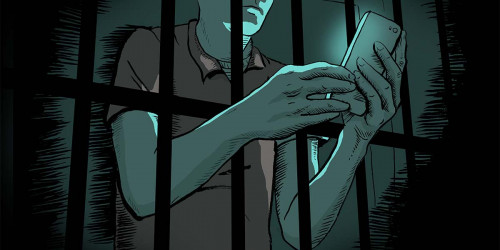
Update: On August 18, after being released briefly to visit his ailing father in the hospital, Alaa Abd El Fattah wrote this open letter explaining the reasons for his hunger strike. On August 27, his father, renowned human rights lawyer Ahmed Seif, passed away. We will continue to...
EFF, ACLU Demolish “It’s Just Metadata” Claim in NSA Spying Appeal
Washington, DC - The Electronic Frontier Foundation (EFF) and the American Civil Liberties Union (ACLU) today filed an amicus brief in Klayman v. Obama, a high-profile lawsuit that challenges mass surveillance, arguing that Americans' telephone metadata deserves the highest protection of the Fourth Amendment.
Larry Klayman, conservative activist and...

We Need Sen. Wyden's Help to Fix the Broken, Anti-User Trade Negotiation Process
We have joined more than a hundred organizations and tens of thousands of individuals across the US to oppose secret, undemocratic trade agreements that affect users' rights. Together, we defeated a bill that would have put agreements like the Trans-Pacific Partnership (TPP) on the fast track to...
U.N. Free Expression Champion, Congressional Internet Defender, and Groundbreaking Counter-surveillance Artist Win EFF Pioneer Awards
San Francisco - The Electronic Frontier Foundation (EFF) is pleased to announce the distinguished winners of the 2014 Pioneer Awards: United Nations Special Rapporteur Frank LaRue, U.S. Rep. Zoe Lofgren, and groundbreaking counter-surveillance artist Trevor Paglen.
The award ceremony will be held the evening of October 2 at the...

Digital Rights Advocates in Mexico and Colombia Unite for Wikipedia Hackathon
Saturday, August 23, EFF will join Wikimedia Mexico, Rancho Electronico, Contingente MX, Fundación Karisma, Panoptykon Foundation, Hackbo, Enjambre Digital, RedPaTodos and May First Mexico to edit and improve...

