


Bipartisan Caucus Launches in the House to Defend Fourth Amendment
On matters implicating privacy, such as mass surveillance or the powers of investigatory agencies, Congress has too often failed to fulfill its responsibilities. By neglecting to examine basic facts, and deferring to executive agencies whose secrets preclude meaningful debate, the body has allowed proposals that undermine constitutional rights to repeatedly...
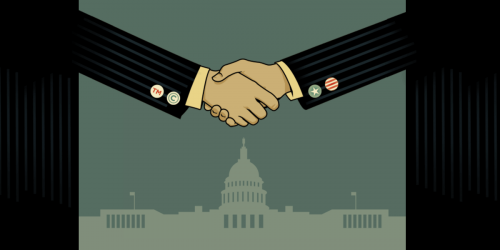
Success! Leader Pelosi Stands Up for Users and Opposes the TPP
Today, EFF joined a broad coalition of other public interest groups at Democratic Leader Nancy Pelosi's office in San Francisco, to present her with a petition carrying an incredible 209,419 signatures with a request to oppose the introduction of the Trans-Pacific Partnership (TPP) during the post-election "lame duck"...

Blockstream Commits to Patent Nonaggression
We’ve written many times about the need for comprehensive patent reform to stop innovation-killing trolls. While we continue to push for reform in Congress, there are a number of steps that companies and inventors can take to keep from contributing to the patent troll problem. These steps include...
More Copyright Law ≠ Less Copyright Infringement
If you only listened to entertainment industry lobbyists, you’d think that music and film studios are fighting a losing battle against copyright infringement over the Internet. Hollywood representatives routinely tell policymakers that the only response to the barrage of online infringement is to expand copyright or even create new copyright-adjacent...

New Censorship and Copyright Restrictions in UK Digital Economy Bill
This week a new Digital Economy Bill [PDF] has been tabled before the United Kingdom Parliament, tackling a diverse range of topics related to electronic communications infrastructure and services. Two of these give us serious concern, the first being a new regime restricting access to online pornography, and the...
Patents: The Next Open Access Fight
When Universities Sell Patents to Trolls, Publicly Funded Research Is Compromised
There’s been a lot of talk lately about the state of publicly funded research. Many, including EFF, have long called on Congress to pass a law requiring that publicly funded research be made available to the public.
...

Making Sense of a Troubling Decision: New Court Ruling Underscores the Need to Stop the Changes to Rule 41
We wrote about a case last week that was deeply disturbing: a federal court in the Eastern District of Virginia held that individuals have no reasonable expectation of privacy in a personal computer located inside their home. In this court’s view, the FBI is free to hack into networked...

Chilean Proposal for Unwaivable Payments to Authors Creeps Onward to Colombia
EFF has observed an alarming trend: when certain parties face challenges in attempting to monetize their contributions to copyrighted works, lawmakers often attempt to address it by handing out new copyright-like veto powers. We've dubbed this trend "copyright creep", and it's running rampant all over the world.
...
How Do We Achieve an Open, Secure, Trustworthy, and Inclusive Internet?
Today at the OECD Ministerial Meeting on the Digital Economy in Mexico, the Global Commission on Internet Governance released its final report, One Internet. Despite its important-sounding name, the Commission is not an official body, but a think tank convened in 2014 by the Center for...
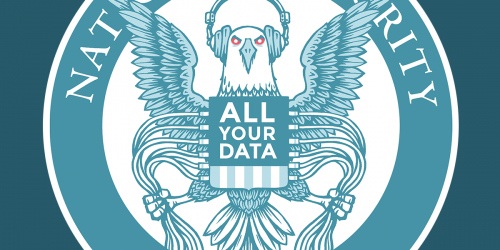
House Leaders Politicize a Tragedy to Block Bipartisan Surveillance Reforms
After hurdling procedural barriers, a congressional attempt to protect privacy and encryption failed on the House floor yesterday, falling short of a majority by a mere 24 votes.
Warrants are not difficult to secure when appropriate. They prevent the government from abusing its powers, as it repeatedly...

