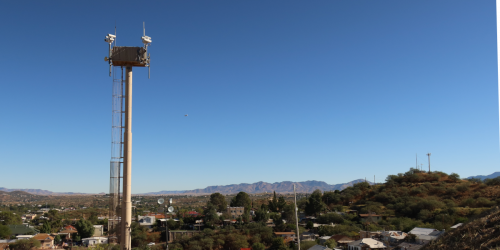
Customs and Border Protection (CBP) is seeking permission from the California city of San Clemente to install an Anduril Industries surveillance tower on a cliff that would allow for constant monitoring of entire coastal neighborhoods.
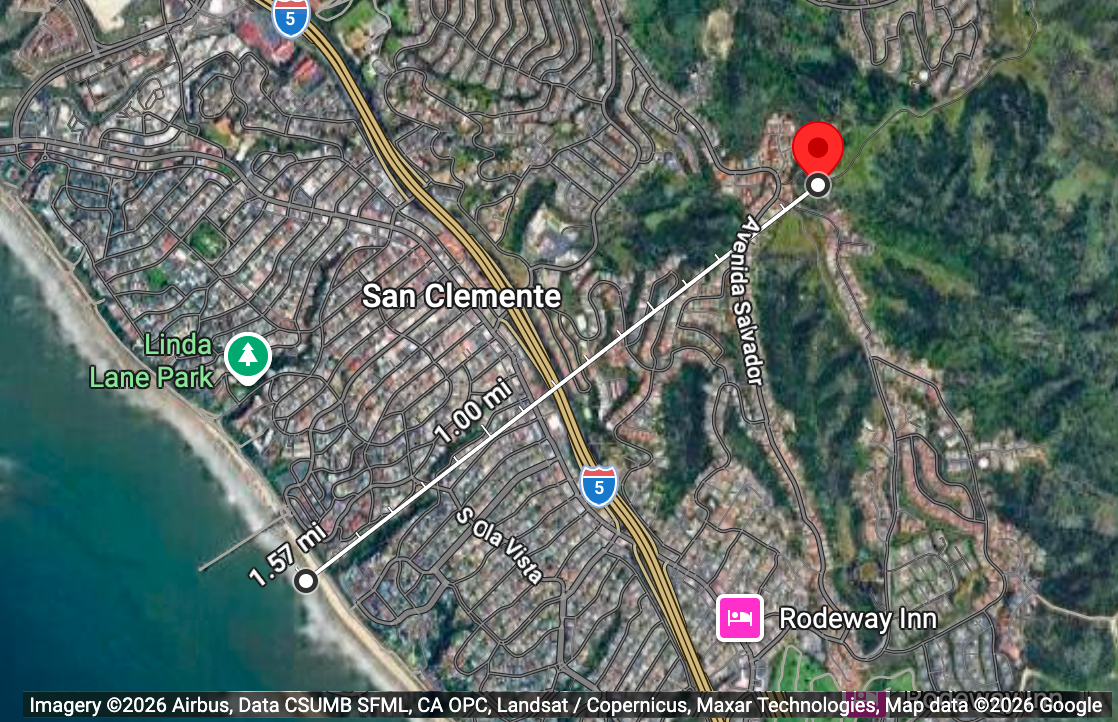
The proposed tower is Anduril's Sentry, part of the Autonomous Surveillance Tower (AST) program. While CBP says it will primarily monitor the coastline for boats carrying migrants, it will actually be installed 1.5 miles inland, overlooking the bulk of the 62,000-resident city. By CBP's own public statement, the system–which combines video, radar, and computer vision–is "constantly scanning" for movement and identifying and tracking objects an AI algorithm decides are of interest. Depending on the model–the photos provided by CBP indicate it is a long range maritime model–the camera could see as far as nine miles, which would cover the entire city and potentially see as far as neighboring Dana Point.
"The AST utilize advanced computer vision algorithms to autonomously detect, identify, and track items of interest (IoI) as they transit through the towers field of view," CBP writes in a privacy threshold analysis. "The system can determine if an IoI is a human, animal, or vehicle without operator intervention. The system then generates and transmits an alert to operators with the location and images of the IoI for adjudication and response."
On April 28, local residents and Oakland Privacy, a privacy- and anti-surveillance-focused citizens’ coalition, are holding a town hall to inform the public about the dangers of this technology. We urge people to attend to better understand what's at stake.
"The planned deployment of an Anduril tower along a heavily used Orange County coastline 75 miles from the border demonstrates that the militarization of the border region is rapidly moving northwards and across the entire state," writes Oakland Privacy.
City officials raised concerns about resident privacy and proposed that a lease agreement include a prohibition on surveilling neighborhoods. CBP rejected that proposal, instead saying that they would configure the tower to "avoid" scanning residential neighborhoods, but the system would remain capable of tracking human beings in residential areas. According to the staff report:
In response to privacy concerns, CBP has stated the system would be configured to avoid scanning residential areas that fall into the scan viewshed, focusing the system on the marine environment. CBP has maintained the purpose of the system is specifically maritime surveillance, and the system would be singularly focused on offshore activities. However, there may be an instance in which there is an active smuggling event, detected by the system at sea, in which the subsequent smuggling event traverses through the residential neighborhoods. In such a case, the system may continue to track and monitor. To restrict this functionality would be contrary to the spirit and intent of the deployment. Therefore, they cannot make such a contractual obligation.
The Anduril towers retain a variety of data, including images and more.
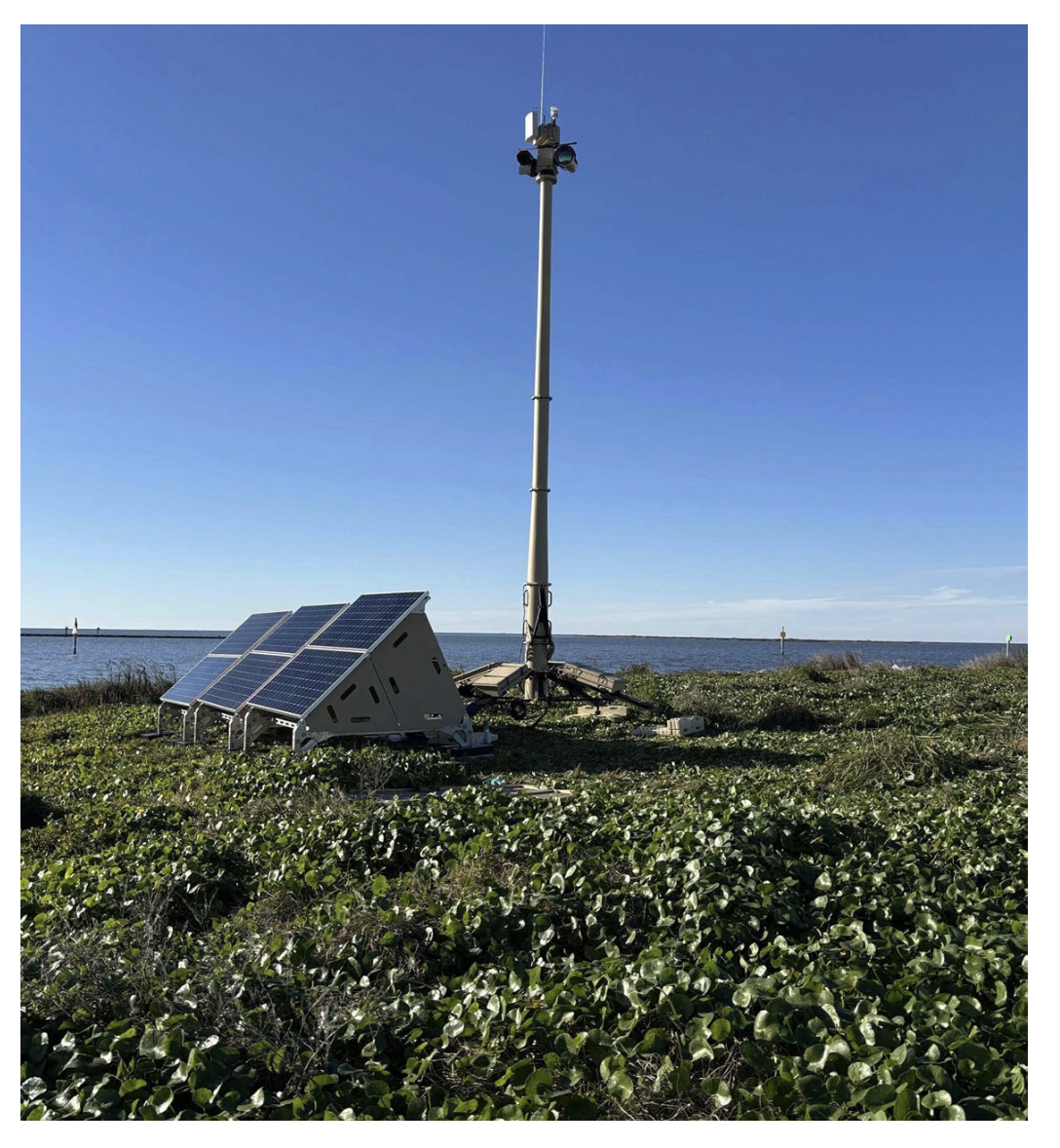
The proposed Anduril surveillance tower. Source: City of San Clemente
"The AST capture and retain imagery which occurs in plan view of the tower sites and is stored as an individual event with a unique event identified allowing replay of the event for further investigation or dismissal based on activity occurring," according to the private threshold analysis.
The document indicates a potential 30-day retention period for imagery, but then contradicts itself to say that data will be held indefinitely to train algorithms: "AST will also be maintaining learning training data, these records should not be deleted." This means that taxpayers would be paying for the privilege of having their data turned into fuel for Anduril's product.
In 2020 CBP said it would work with National Archives and Records Administration (NARA) to develop a retention schedule for training data (i.e., a timeline for deletion). However, when EFF filed a Freedom of Information Act (FOIA) with NARA, the agency said there were no records of these discussions. Likewise, CBP has not provided records in response to the FOIA request EFF filed with them seeking the same records.
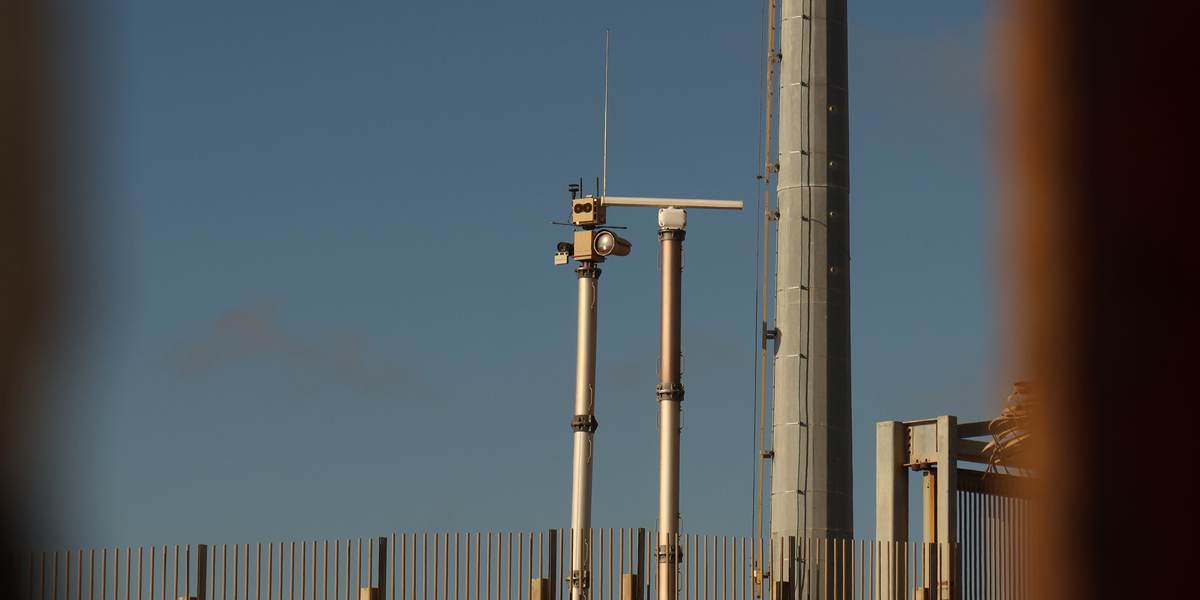
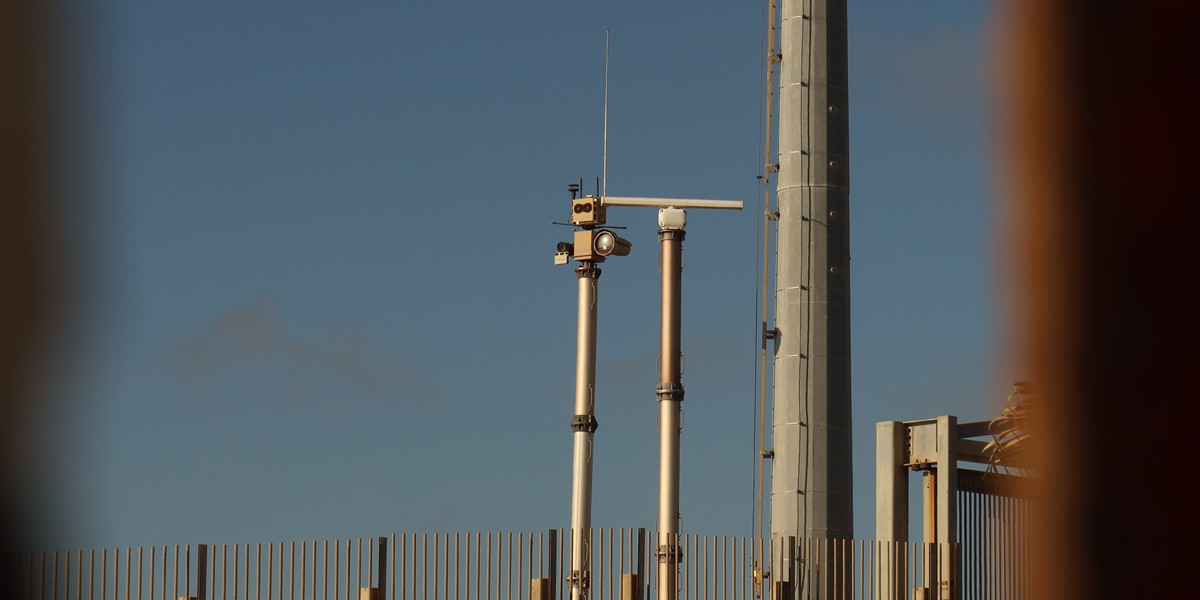
Anduril Maritime Sentry in San Diego, where the border fence meets the ocean.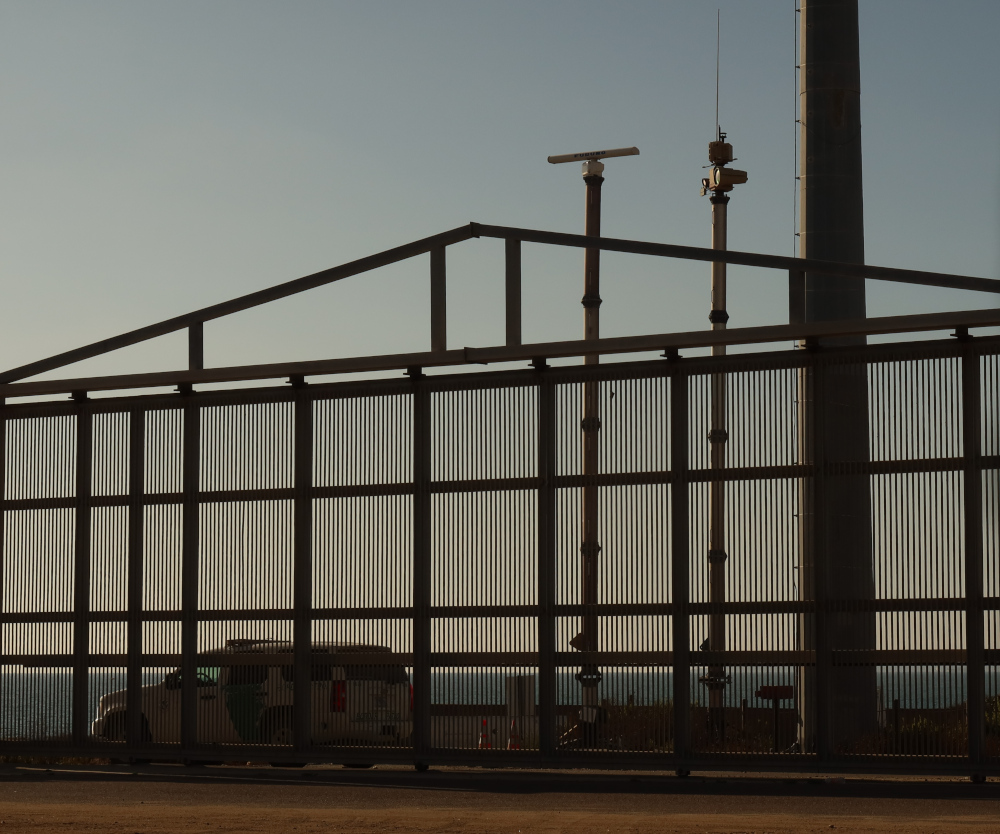
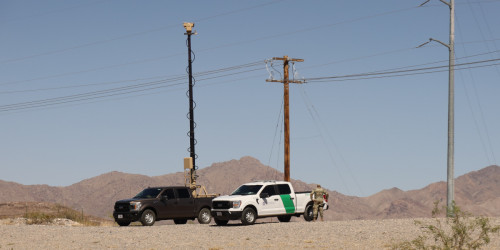
This would not be the first CBP tower placed along the coastline in California. EFF identified one in Del Mar, about 30 miles from the border, and another in San Diego County where the border fence meets the Pacific Ocean. CBP has also applied to place towers–although not necessarily the Anduril model–in or near several other coastal locations: Gaviota State Park, Refugio State Park, Vandenberg Air Force Base, Piedras Blancas and Point Vicente. The California coastline isn’t the only coastline dotted with surveillance towers. The Migrant Rights Network has also documented numerous Anduril towers along the southeast coast of England. Where the San Clemente tower would differ is that there is a substantial population between the tower and the beach, and because it's a 360-degree system, it can watch neighborhoods even further from the coast.
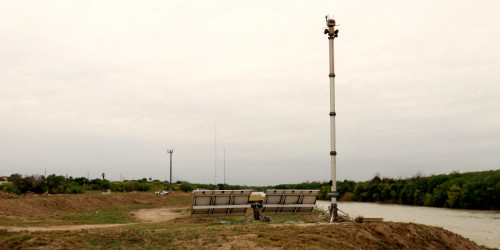
However, this won't be the first time an Anduril tower has been placed next to a community. EFF has documented numerous Anduril towers in public parks along the Rio Grande in Laredo and Roma, Texas. In Mission, Texas, an Anduril tower was placed outside an RV park: the tower could not even see the border without capturing data from the community. Because AI can swivel the cameras 360 degrees, two churches were within the "viewshed" of that tower.
Click here to view EFF's ongoing map of CBP surveillance towers.
Many border surveillance towers are placed on city or county property, requiring a lease to be approved by the local governing body–as is the case with San Clemente. In 2024, EFF and Imperial Valley Equity and Justice organized an effort to fight the renewal of a Border Patrol's lease for a tower next to a public park. The coalition lost narrowly after a recall election ousted two officials who were critical of the lease.
CBP is rapidly increasing the number of towers at the border and beyond, recently announcing the potential to install 1,500 more towers in the next few years–more than tripling what we've documented so far–at a cost of more than $400 million to the public for maintenance alone. This is despite more than 20 years of government reports that have documented how tower-based systems are ineffective and wasteful.
It's time to fight back.