Cory Doctorow, Master of Ceremonies
November 8, 2010, 7:30 PM
111 Minna Street
San Francisco
EFF established the Pioneer Awards in 1992 to recognize leaders
on the electronic frontier who are extending freedom and innovation
in the realm of information technology. Please join us in
congratulating the 2010 Pioneer Award Winners:
Steven Aftergood
Transparency Activist
James Boyle
Public Domain Scholar
Pamela Jones and the Groklaw Website
Legal Blogging
Hari Krishna Prasad Vemuru
E-voting Researcher
EFF will honor the winners at our 2010 Pioneer Awards Fundraiser
on Monday, November 8th, at 111 Minna Gallery. Award-winning author
and activist Cory Doctorow will keynote the event, and the
celebration will include drinks, light refreshments and excellent company.
A VIP event with Cory Doctorow, the Pioneer Award winners, EFF
founders and board members, and other luminaries will begin at 6:30 PM.
Pioneer Award candidates were nominated by the public. The winners
were chosen by an independent judging panel, listed below.
Save money by purchasing tickets in advance at eff.org/pioneerfundraiser
Special thanks to our sponsors:
 |
 |
 |
| Judging Panel
EFF would like to thank the Judging Panel for the 2010 Pioneer Awards: Kim Alexander President and founder, California Voter Foundation Jim Buckmaster CEO, Craigslist Cory Doctorow Award-winning author and activist Mitch Kapor President, Kapor Enterprises; co-founder and Drazen Pantic Co-director, Location One Barbara Simons Computer scientist, IBM Research (retired); former president, ACM James Tyre Co-founder, The Censorware Project; EFF policy fellow Past Pioneers 2009: Limor "Ladyada" Fried, Harri Hursti, Carl Malamud 2008: Mitchell Baker, Michael Geist, Mark Klein 2007: Yochai Benkler, Cory 2006: Craigslist, 2005: Mitch Kapor, 2004: Kim Alexander, David 2003: Amy Goodman, Eben 2002: Dan Gillmor, Beth 2001: Bruce Ennis, Seth 2000: "Librarians Everywhere", 1999: Jon Postel, Drazen 1998: Linus Torvalds, Richard 1997: Hedy Lamarr, Johan 1996: Robert Metcalfe, Peter 1995: Philip Zimmermann, Anita 1994: Ivan Sutherland, Bill 1993: Paul Baran, Vinton Cerf, 1992: Douglas C. Engelbart, |
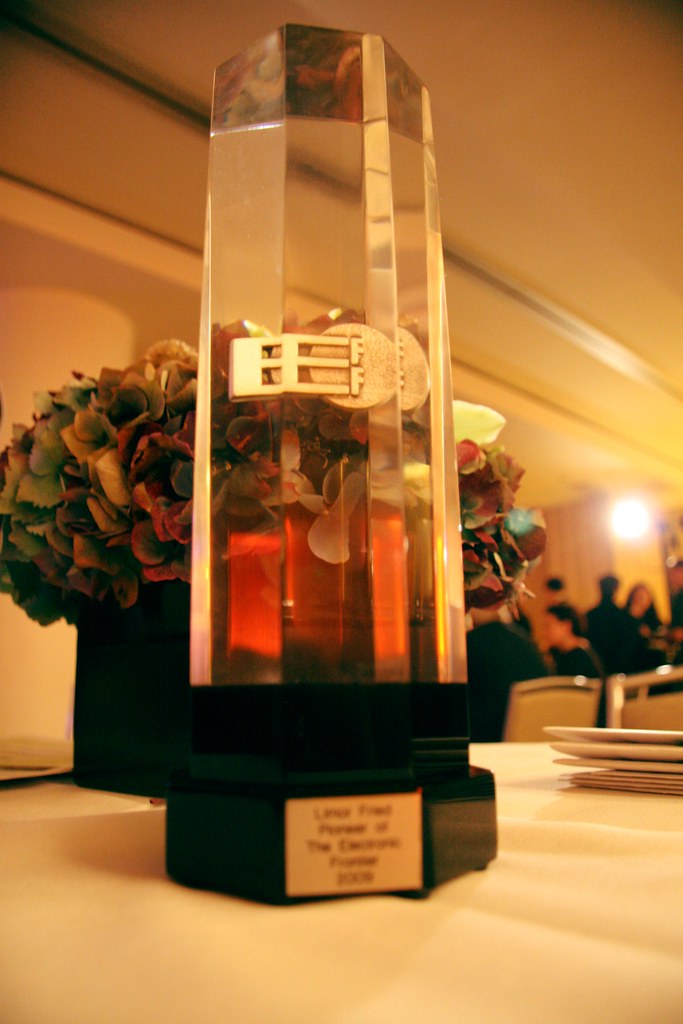
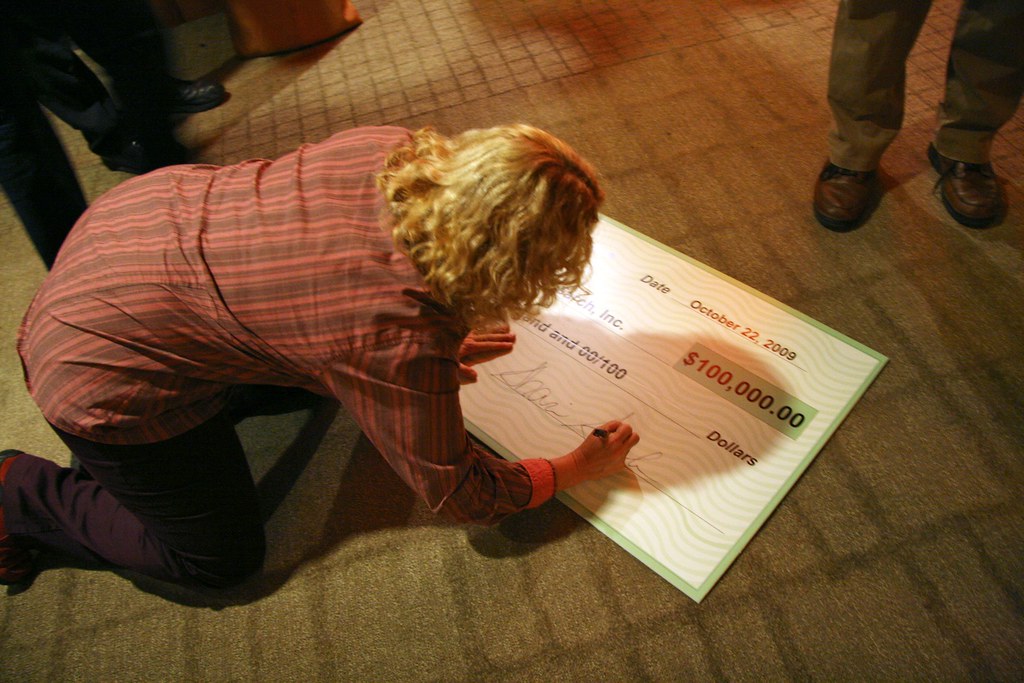
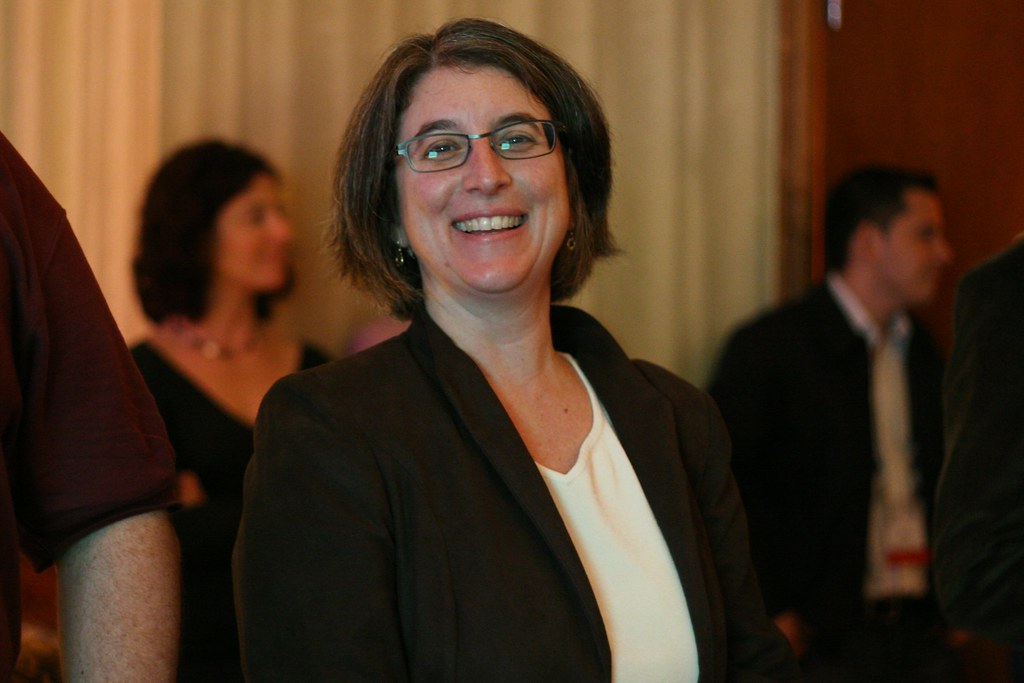
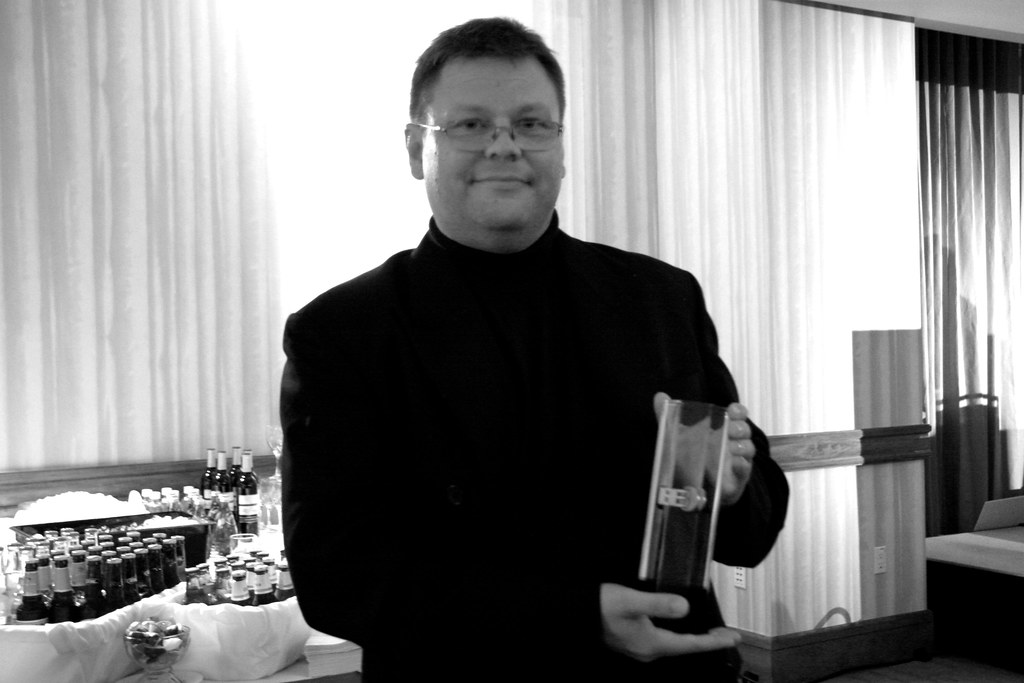
Photos from the 2009 Awards
Event photos by Quinn Norton. Biographies of the Pioneer Award Winners Steven Aftergood directs the Federation of American Scientists (FAS) Project on Government Secrecy, which works to reduce the scope of official secrecy and to promote public access to government information. He writes and edits Secrecy News, an email newsletter and blog that reports on new developments in secrecy and disclosure policy. Secrecy News also provides direct public access to various official records that have been suppressed, withdrawn, or that are simply hard to find. In 1997, Mr. Aftergood was the plaintiff in a Freedom of Information Act lawsuit against the Central Intelligence Agency that successfully led to the declassification and publication of the total intelligence budget for the first time in 50 years. James Boyle is William Neal Reynolds Professor of Law and co-founder of the Center for the Study of the Public Domain at Duke Law School. Professor Boyle is recognized for his exceptional scholarship on the "second enclosure movement" the worldwide expansion of intellectual property rights and its threat to the rich public domain of cultural and scientific materials that the Internet might otherwise make available. An original board member of Creative Commons and co-founder of Science Commons, Professor Boyle has worked for over 20 years as both an academic and institution builder to celebrate and protect the values of cultural and scientific openness. When Pamela Jones created Groklaw in 2003, she envisioned a new kind of participatory journalism and distributed discovery a place where programmers and engineers could educate lawyers on technology relevant to legal cases of significance to the Free and Open Source community, and in turn where technologists could learn about how the legal system works. Groklaw quickly became an essential resource for understanding such important legal debates as the SCO-Linux lawsuits, the EU anti-trust case against Microsoft, whether software should qualify for patent protection, software licensing, and the OOXML/ODF. Hari Krishna Prasad Vemuru is a security researcher in India who recently revealed security flaws in India's paperless electronic voting machines. He has endured jail time, repeated interrogations, and ongoing political harassment to protect an anonymous source that enabled him to conduct the first independent security review of India's electronic voting system. Prasad spent a year trying to convince election officials to complete such a review, but they insisted that the government-made machines were "perfect" and "tamperproof." Instead, Prasad's international team discovered serious flaws that could alter national election results. Months of hot debate have produced a growing consensus that India's electronic voting machines should be scrapped, and Prasad hopes to help his country build a transparent and verifiable voting system. |