
 EFFector Volume 38, Issue 11🔊 Mass Surveillance for… Loud Music?Welcome to an all-new EFFector, your regular digest on everything digital rights from the Electronic Frontier Foundation. In our 846th issue: A victory for facial privacy, EFF goes to Washington, and even more troubling examples of how police are using the mass surveillance capabilities of license plate readers. |
|---|
|
When you lose your rights online, you lose them in real life. Become an EFF member today! |
|---|
More License Plate Reader Mission Creep: School Residency Verification, Background Checks, and Noise Complaints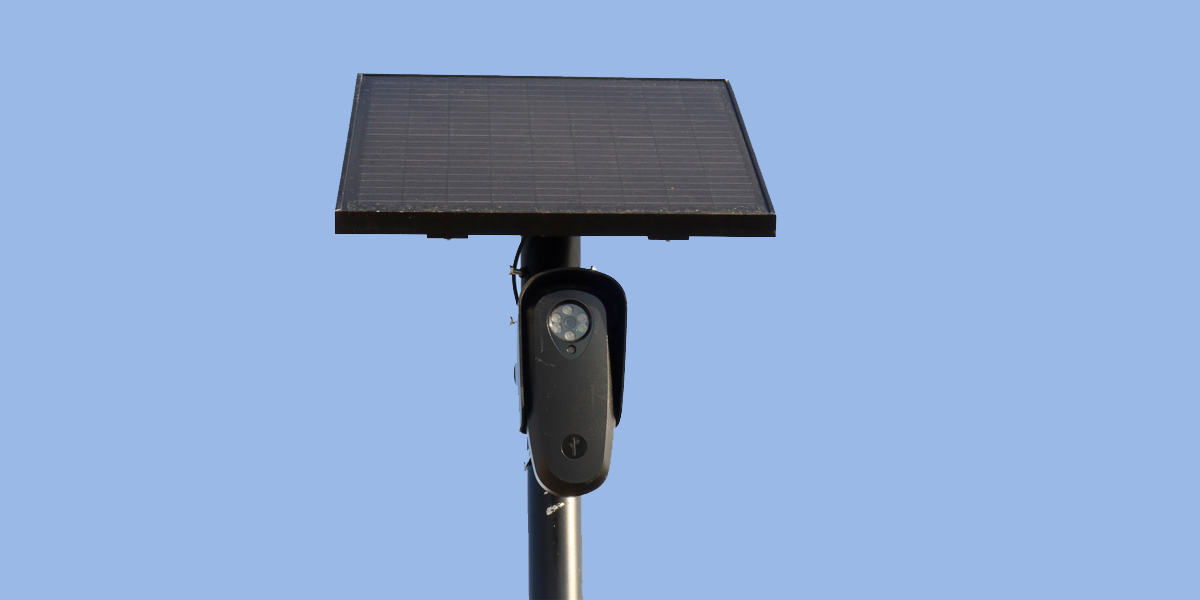
An EFF analysis of millions of searches of Flock Safety automated license plate reader (ALPR) data by police has uncovered a troubling pattern: in the absence of a warrant requirement to search ALPR databases, law enforcement agencies have moved beyond specific investigations to use these surveillance networks for virtually any whim. Our findings suggest that the absence of a warrant requirement has fostered a culture of unrestricted access to sensitive location data, allowing agencies to leverage that data beyond the scope of specific criminal investigations. As a refresher: law enforcement agencies lease or purchase camera systems from Flock Safety and then mount them by the side of the road and at intersections to document every vehicle that passes, including the plate, make, model, color and distinguishing characteristics, along with the date, time, and location of where it was seen. Law enforcement's talking points—often scripted by the company itself—trumpet their role in solving high-stakes crimes. But the data reveals a different story. What they're not saying is that ALPRs are also frequently used for extremely low-level investigations, such as verifying whether a student lives within a particular school zone. In some cases, police have even used this tech to conduct employment background checks and investigations into loud music complaints.
EFF Updates👤 ABOUT-FACE RECOGNITION: In a victory for privacy, Meta has removed facial recognition code from Meta AI, a smartglasses companion app installed on millions of phones. Last week, a damning Wired report revealed that inactive code quietly embedded in Meta AI could convert images of faces into unique biometric signatures to identify strangers in public. EFF’s Threat Lab verified these findings through static analysis. While we won this round, the tech giant's ambitions probably aren't going away. EFF will keep watching. 🤖 AI AND SURVEILLANCE: Testifying before a House Homeland Security subcommittee, EFF Senior Policy Analyst Dr. Matthew Guariglia said that governments must not adopt emerging and powerful AI technologies without also adopting strong and clear safeguards to protect Constitutional rights. "EFF opposes the use of generative AI for the purposes of mass government surveillance," said Guariglia, "because that use supercharges unconstitutional violations of civil liberties and because government secrecy prevents the public and lawmakers from knowing when generative AI models make mistakes." 🚫 SOCIAL MEDIA BANS: Several U.S. states are pushing to ban young people from social media entirely. This marks the latest wave of censorship bills masquerading as “children’s online safety” measures, with states like Massachusetts, Idaho, Minnesota, North Carolina, South Carolina, Illinois, and EFF’s home state of California leading the charge. Our new primer breaks down this dangerous wave of social media bans: how they work (and why they don’t), who they harm, and how we can fight back. 📣 WELCOME NICOLE: This week, EFF welcomes our new Executive Director Nicole Ozer! A legal expert on privacy and surveillance, artificial intelligence, and digital speech, Nicole has long been a partner of EFF’s in the fight to defend civil liberties in the digital world. EFF’s work to ensure technology supports freedom, justice, and innovation is more urgent than ever. And with Nicole’s decades of leadership in public interest technology work, EFF is poised to be stronger than ever to meet this moment and build for the fights ahead. |
|---|
Shut Down Turnkey Totalitarianism
William Binney, the NSA surveillance architect-turned-whistleblower, called it the "turnkey totalitarian state." Whoever sits in power gains access to a boundless surveillance empire that scorns privacy and crushes dissent. |
|---|
"It's kind of the equivalent of launching an entire nationwide chase over someone's subwoofer or muffler."EFF's Rindala Alajaji on the revelation that police use mass surveillance technology for investigations as trivial as noise complaints. 
MiniLinks🗣️ Free Speech
🔒 Privacy 🗝️ Security
AnnouncementsEFF Events
Corporate Giving and Sponsorships
|
|---|
Fresh EFF Gear Is Here
Show off your support for EFF with hot digital rights merch from our online store. Just in: emoji-inspired pins and stickers illustrating EFF activist Cory Doctorow’s concept of “enshittification.” In addition to EFF shirts and hoodies, we have a wide variety of freedom-supporting swag in stock, including (extremely popular) liquid core gaming dice, HTTP playing cards, and a tactile Lady Justice braille sticker. |
|---|

AdministriviaEFFector is a publication of the Electronic Frontier Foundation. Editor: editor@eff.org Membership and donation queries: membership@eff.org General EFF, legal, policy, or online resources queries: info@eff.org
Reproduction of this publication in electronic media is encouraged. MiniLinks do not necessarily represent the views of EFF.
About EFFThe Electronic Frontier Foundation is the leading nonprofit defending online civil liberties. We promote digital innovation, defend free speech, fight illegal surveillance, and protect rights and freedoms for all as our use of technology grows. Find out more at https://www.eff.org/.
This message is printed from 100% recycled electrons. EFF appreciates your support and respects your privacy.
|
|---|
